


Trip list for 26 April - 10 May 2007
Lesbos Spring 2007 – 26 April – 3 MayA Speyside Wildlife holiday with Ian Rowlands and myself.
Guests: David, Mike, John, Vikki & Ian, Ian, Margaret, Mary & Dave, Stuart, Lydia & Ian
Here is the trip report for the Speyside week followed by a brief summary of Liz and my holiday week.
Thursday, 26 April
 Black-headed Bunting
Leica APO 77 with 20WA & Nikon Coolpix 995
We arrive in Mytilini at 1515h and are soon on the road to our hotel, The Pasiphae, in Skala Kallonis. We check in, freshen up, and are chomping at the bit to get out and get birding!
We head over to the East River where on pulling up at the mouth we are greeted with four Little Egrets, one of which is feeding right below us. Common Terns beat up and down while Yellow-legged Gulls loaf around the bar. An Olivaceous Warbler sings from the nearby scrubby hedge and we soon locate the songster sat out in full view for us to enjoy. A Black Stork is picked up flapping lazily across the river mouth when the first of around 10 Bee-eaters are seen, most perched in the middle-distance on wires. Both Collared Pratincole and Ruddy Shelduck are fly-overs as they head up the river. At the ford Ian find a couple of obliging Temminck’s Stints and on getting out of the vans he is straight on to a male Red-footed Falcon perched on a wire. An unfamiliar song starts up behind us and Ian soon locates a stunning male Black-heading Bunting, his black executioner’s mask clashing with the bright yellow plumage. We take the dirt track over towards the saltpans where we come across a flock of 100+ Spanish Sparrows sat up in the track-side bushes. We’ve only been in the field an hour and a half but we are already clocking up the species count! We retire back to the hotel for a quick freshen up and enjoy our first Lesbos dinner.
Friday, 27 April
It’s an early start as yesterday evenings little sojourn merely whetted the appetite and we can’t wait to get stuck in to some Lesbos birding good and proper. Our pre-breakfast trip is to the Inland Lake. Immediately on arrival, Steve finds the first of at least six Little Crakes. And boy are they showy! They creep along the reed fringe, climb up reeds and nimbly tackle any bush in their way! The air is an aerial soup of hirundines and Common Swifts. One bush is used by the swallows and martins to sun themselves in the chill morning against which we are all wrapped up. The reeds are alive with Great Reed, Reed and Sedge Warblers busily hopping from stem to stem picking at insects. A Night Heron flies in and lands right out in the open on a semi-submerged bush. It poses for us in the brightening morning light as a female Little Crake picks its way past. A Purple Heron lifts from the reeds but a second is soon found roosting up, visible form its shoulders up we can make out the purple of the head and neck. We wander along the lake edge when Steve finds a male Little Bittern sat out in the open, its eyes fixed firmly on the water for a passing fish or tadpole. With a few minutes left we drive over to the mouth of the Potamia valley where we see a couple of Whinchat and Steve spots a Quail flying over the nearest field which several of the group get on to before it drops back in to the barley.

 Small Skimmer (female top, male below)
Panasonic Lumix DMC-FZ30
After a well-earned breakfast we collect our packed lunches and we are back in the field. We haven’t got more than a few hundred yards from the hotel when a Whiskered Tern stops us in our tracks. On the edge of the village and overlooked by houses the tern is feeding along a culvert of pretty yucky looking water but managing to find plenty to eat. We enjoy this smart marsh tern for five or so minutes before making our way over to the East River. The sky here too is dotted with hirundines and swifts and Dave finds a handful of Alpine Swifts. At the ford there is no sign of the reported Citrine Wagtail which has attracted another group and several photographers. Several Red-throated Pipits feed on the gravel islands below us, some in their fine brick-red fronts and others in their winter streaks. Ian spots a Spotted Crake feeding under an overhanging bush and all scopes are soon trained on to it. Steve then picks up a Collared Pratincole coming down the river, almost certainly fresh in, and it wings its way past us upstream giving us cracking views of its hirundine-cum-tern-like shape and flight, forked tail, white rump and chestnut underwings. A White Stork appears just before Steve finds a Lesser Grey Shrike on one of the wires. Scopes out again and although in the smei-distance, you can still see the large black forehead and a slight pinkyness to the underparts. A silver-winged male Red-footed Falcon is next to thrill us and a couple of Black-headed Yellow Wagtails are found. A song familiar from last night starts up behind us, and looking round there is a spanking male Black-headed Bunting sat less than 20 feet from us! We drive the east side of the river with the sun behind us and find loads of Wood Sandpipers dotted along its length and can hear the continuous songs of both Olivaceous Warbler and Nightingale. We stop by the north-east corner of the saltpans to take advantage of the sun, and find on our arrival 10+ White-winged Black Terns bouncing above the channel separating the pans from the surrounding land. They float lazily with their languid flight flashing their pearly wings. The pans of course hold Flamingos and an array of common waders including Avocet and Redshank. Two Short-toed Eagles appear overhead, one briefly hovering. Just as we ready ourselves to move off Ian finds a Tawny Pipit in a sheep field. Greater Flamingos
Panasonic Lumix DMC-FZ30
We arrive at Achladeri and park the vehicles in the shade. The sun is high and when out of the cool northerly breeze is lovely and warm. We no sooner set off in to the woodland when Ian spots a Masked Shrike building a nest in a fork of a branch. We get great views of both male and female of this stunning Mediterranean shrike. The wood is generally quiet but eventually Ian picks up on our main goal, Krüper’s Nuthatch. We track the bird back to a broken trunk and from the other side of the dry ravine we are able to enjoy both parents bring food to their brood inside the nest hole, occasionally leaving with a faecal sac to deposit away from the nest. We enjoy these fabulous birds for some time before moving off to search for other woodland birds. On a sunny slope we can hear a Short-toed Treecreeper calling. After some perseverance we manage to track it down but only get brief views. The sunny clearing also provides us with a few butterflies including Knapweed Fritillary. Woodchat
Leica APO 77 with 20WA & Nikon Coolpix 995
We return to the vans for lunch and relax in the shade of the pines. It’s lovely and warm in the sun and out of the cool north wind. Woodchat, Red-backed Shrike and Black-eaered Wheatear provide some distraction from our lunch bags. Steve finds an Orphean Warbler feeding an open bush below a Woodchat but only a few manage to get to it before it flies off and does not return. A couple of Long-legged Buzzards appear overhead, their reddish tails clear in the bright sun against the blue sky. Poppies near Achladeri
Panasonic Lumix DMC-FZ30
We make a brief stop at ‘Derbyshire’ where we find a couple of Great White Egrets and several Ruddy Shelducks distantly. The heat haze isn’t doing us any favours out here in the wide expanse of the coastal strip so we head up Napi valley in search of raptors. Red-backed Shrike
Leica APO 77 with 20WA & Nikon Coolpix 995
We stop just south of Napi village and take a walk down a small valley. A calling Hoopoe provides a fitting backdrop as we search the scattered woodland slopes around us. Steve has a minor aberration when he calls Pied and Spotted Flycatchers in a bush only to find they are a Chaffinch and a Red-backed Shrike! A Whinchat is found on a small bush only to be chased off by a Woodchat which in turn is replaced by a Woodlark! The latter poses brilliantly for us showing off its features like a page from the field guide! A Jay beats a hasty retreat from the olive grove being pursued by several small birds. Its nor just birds that are popping up all around us, A Red Orbed Underwing Skipper butterfly and a Broad-bodied Chaser dragonfly provide additional interest. John then picks up a female Red-backed Shrike on a hedge followed quickly by a singing male Cirl Bunting. Mallow Skipper is added to our butterfly list.
We climb back aboard the vans and head up the Napi valley, our progress is stopped briefly when Dave spots a raptor circling overhead which we quickly confirm as a female Sparrowhawk. Agama
Agama
Leica APO 77 with 20WA & Nikon Coolpix 995
We settle down on a wooded slope overlooking the valley. Black-eared Wheatears are hopping about when Steve finds a Wood Nuthatch carrying food. It lands in the top of an oak where most get a brief view before it heads of to feed hungry mouths. A Rock Nuthatch puts in a brief appearance and an Agama lizard is seen sunning itself on top of large rock. A Hoopoe then flies right over our heads flashing its black-and-white wings as it bounces across the valley. The distinctive cry of a Middle Spotted Woodpecker soon finds Ian locating the bird feeding in a small oak. Directions are shouted out and we are soon all watching it getting good views of this red-crowned woodpecker. Whilst watching a Long-legged Buzzard Steve spots a falcon coming over the valley. It’s a Lesser Kestrel which gives great views as it comes overhead and out of view. Two Hoopoes are now calling, one from up the valley and one down the valley when one is seen in flight carrying food and disappears in to a large oak. A Common Buzzard rounds off a good hour here before we head back to the vans.
We arrive at the Saltpans and begin sifting through the waders. Flamingos and Avocets are soon looked over and Ruff, Black-tailed Godwit and Curlew Sandpiper are all found. Ian then picks up on a sleeping wader. It’s a Knot and a great find for Lesbos. The pans are suddenly alive with marsh terns. The flashing wings of White-winged Black Terns with the odd Whiskered Tern scattered amongst them. A quick count reveals at least 67 White-winged Black and 35+ Whiskered. Fantastic! Looking across the far side of the pans we can see three different flocks of waders bombing around. They are mostly Little Stints with Ruff and Curlew Sands also picked out amongst them. We look for what has put them up and in unison Ian and Steve yell ‘Hobby!’ as a falcon slices through the sky across the pans. No sooner have we recovered from the suddenness, when Steve shouts ‘Honey-buzzard!’ pointing to a raptor circling over the road. We all get good views of the buzzard as it circles on flat wings with its long tail and small head.
Finishing on a high we retreat to the hotel to freshen up before another Greek dinner and what is fast turning in to high-spirited checklist sessions! Turkish Gecko – a hotel resident
Panasonic Lumix DMC-FZ30
Saturday, 28 April
No pre-breakfast today but some find the energy to get up for a pre-breakfast walk down to the sea and saltmarsh. The normally wet pools by the hotel are dry after one of the driest winters on record here. Still, Reed and Sedge Warblers, Whinchat and others are all seen.
We begin our journey west and a Blue Rock Thrush is seen sat on a roadside rock before our first stop at Liminos Monastery. A Turtle Doves purrs from a nearby overhead wire and two Subalpine Warblers sing from bushes just below us but prove very elusive and not everyone gets on to the one that eventually breaks cover.
Our next stop is the Grand Canyon where we enjoy great views of Crag Martins and song-flighting Blue Rock Thrush. The rock thrushes are breeding and both male and female are constantly carrying food to the nest site in a fissure in the rock. A female Orphean Warbler is seen briefly and a Rock Nuthatch bounces noisily around the rock below. Above the crag are Short-toed Eagle and Long-legged Buzzard soaring on thermals and a Black Stork glides past. We can hear a Cinereous Bunting singing and Ian spies a lemon-coloured head sticking up from the top of a bush. Mike spots our first Spotted Flycatcher of the trip and Mistle thrush singing below us.
We stop briefly at Perivoli monastery, nestled in the valley bottom, but it is very quiet. The quiet is broken only by a couple of Scops Owls calling but there is little chance of locating them in their daytime roost in this wooded area.
Our next stop is just west of the Erosos road junction and no sooner are we out of the vans and we are getting stuck in to birds. Isabelline Wheatears are all around us, flitting from rock to rock. A couple of males are singing their ‘Star Wars’ songs, a scratchy jangle interspressed with whistles and beep-like noises. We get fantastic views of a singing male Cretzschmar’s Bunting and there are several Red-backed Shrikes dotted around. Ian finds a male Golden Oriole low in a tree and we all get views of this exotic migrant. Dave then spots a flacon going through the valley. ‘Eleanora’s!’ shouts Steve. Wow! Our luck is in as we get good scope views of this large, long-winged migrant falcon as it sweeps past towards Ipsilou monastery. Within a few minutes a female Red-footed Falcon passes right over our heads. This is fantastic! We can hear a Cinereous Bunting and locate it distantly. Luckily it flies closer and lands on the nearby overhead wires from where it continues to sings is doleful song. Steve then spots a pair of Cuckoos in the valley bottom, the female of which is the bright ‘rufous’ form. This form is rare in Britain and Western Europe, but is much commoner this far east.
We move on to Ipsilou. Part-way up the road a Rock Nuthatch head is poking from a nest hole buts as much as we get to see! Several Cinereous Buntings are singing and we soon locate one on top of a small tree and we get great views of this island specialty, its lemon yellow head gleaming in the warm sun. We then hit on a treed gully which is crawling with warblers. Willow Warblers and Chiffchaffs rub shoulders with a few Wood Warblers and we all get at least glimpses of the much rarer Eastern Bonelli’s warbler. We can hear three different birds singing occasionally but they prove incredibly elusive. Spotted and Pied Flycatchers add ot the mix when Ian spies our second Eleanora’s of the day scything through the blue sky. Just before we reach the top we get great views of Sombre Tit and Alpine Swifts passing by at eye level – great stuff! Male Cinereous Bunting
Leica APO 77 with 20WA & Nikon Coolpix 995
We take lunch under the monastery walls, in the brilliantly hot sun on the sheltered side if the mount. Lesser Kestrel and Hobby sweep past before we are all entertained by a superb male Collared Flycatcher which performs brilliantly for us.
We make a brief stop at the Petrified Forest for David who as part as being a bird-nut is a paleantological nut as well. Whilst David has a quick walk in the ‘forest’ we are all entertained with a male Ortolan Bunting with a large flock of yellow wagtails, mainly Black-headed with a few Blue-headed. Leaving the site we spy a Little Owl on a fest post and then chance upon a pair of Chukar just by the road and we get brilliant views of this Red-legged Partridge-like birds.
On our way back to the Kalloni area we stop off at a known Scops Owl site. There is no sign of it in the usual roost trees, but after a little searching, Ian finds it roosting high in a eucalyptus. Scopes are soon in position and we get good views as it sits motionless on a piece of flaking bark by the trunk.
We make our way along the west side of East River. Ian (Co) spots a group of six Glossy Ibis feeding in the trickle that remains of the river. We crawl along stopping for several Temminck’s Stints, three Marsh Sandpipers which are obligingly feeding with Greenshanks for comparison, and a lone Spotted Redshank which is moulting in to summer plumage. As we near the end of the river we find a male Little Bittern sat out in the open on the opposite bank, posing for us to enjoy.
Time has caught up with us and we retreat to the hotel for a relax and freshen up before dinner.
Sunday, 29 April
We wake to a bright, still, windless morning. Before breakfast, most of us head out to East River. The waders we found last evening were a good omen that things are moving and our hopes are high as we approach the river ford. Little and Temminck’s Stint feed together along the damp mud edges. A Black Stork lifts from somewhere and circles the lower river before heading off northwards. Ian then spies a Roller on wires across the fields. We are looking in to the sun a little so we make sure we all get views from here before jumping back in the vans and heading off across towards the Saltpans to see if we can improve on the light. Luckily we chance upon a cut field with room to sneak the vans into the gateway. From here we get much improved views of the Roller and are thrilled with some flight views when it transforms in to a vivid turquoise and rufous blur. To add to the exotic scene, a flock of Bee-eaters wheels around us. Some are perched along the fence whilst others wheel around hawking for insects. This is simply fantastic. The sky is also thick with swifts as hundreds of Common and the odd Alpine pile through, straight off the sea, heading north towards the mouth of the Napi valley eager to keep pushing on their northward migration to central and northern Europe. Rüppell’s Warbler
Panasonic Lumix DMC-FZ30
After breakfast we head north to Petra. No sooner are we out of the vans and we are watching a cracking male Rüppell’s Warbler singing away atop of nearby bush. A Black-headed Bunting sings from the wire above us and a pair of Subalpine Warblers too and fro from a nest site. A Lesser Kestrel appears in the sky among the increasing numbers of Alpine Swifts. We move on briefly to check out a report of a singing Olive Tree Warbler which turns out to be a Great Reed Warbler – shame. Black-eared Wheatear
Panasonic Lumix DMC-FZ30
We move on to the Molivos/Petra reservoir which is alive with bathing and loafing Yellow-legged Gulls. More Alpine Swifts are piling through above us. A distant circling falcon turns out to be a Peregrine. Two Cuckoos call to one another when Dave yells’ Great Spotted Cuckoo!’. We get brief views so decide to relocate but can’t find the bird. A rather mangy fox walks across the hillside we searching for the cuckoo and a River Warbler singing from the valley bottom, fails to show himself. Damn!
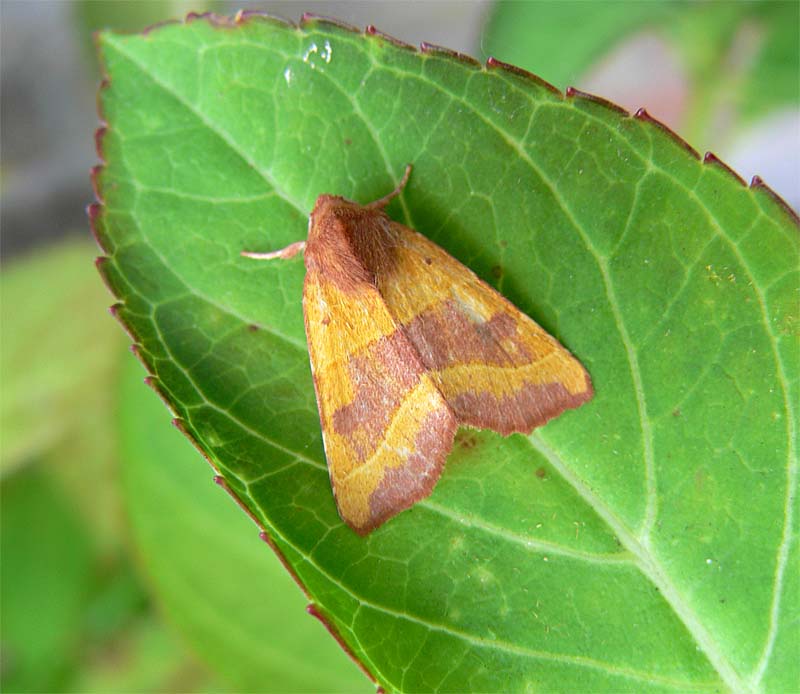
We make a brief stop in Molivos for some holiday shopping to find the shops closed! It’s not an altogether wasted journey as Mary finds a gorgeous Cream-spotted Tiger moth on a gatepost!
We take the rough track along the north coast. As we rise up from the beach level we see Shags just offshore and Linnets on the overhead wires. We stop in the first valley. It’s dead. We scan around but still nothing calling or showing. Steve picks up a falcon coming from the south and we are all soon enjoying our second Eleanora’s Falcon of the week. Great! A couple of Long-legged Buzzards appear in the sky and keep us entertained, both showing off their foxy reddish tones very reminiscent of Red Kite. A pair of Sombreros bounce around the slope above us and a couple of Short-toed Eagles drift over low providing fantastic views – you can even see all their underside barring and spotting with bins! A little further along the track Steve spots a Little Owl in tiny window of a farm building. ‘I bet he’s there every trip!’ exclaims John. He might be right! Rock Grayling
Panasonic Lumix DMC-FZ30
We find a lovely sheltered valley for our lunch spot. A male Red-backed Shrike keeps us company hunting from some small bushes and a male Cretzschmar’s Bunting sings continuously. Behind us is a Turtle Dove purring on and off, a sound too many of us rarely here during our British summer these days. An Orphean Warbler begins to sing from a tree above us and the seemingly ever-present Nightingales sing from the bushes along the dry stream-bed. Black-eared Wheatears and Subalpine Warblers round off our lunchtime roll call of performers.
We travel further along the coastal track and make a brief stop at the hot springs. Steve wades out into the surf encouraging others to do so. Only Lydia is game enough to join him and seek out some of the hot spots underfoot below the breaking surf. Steve finds a nice hot pebble and throws to those on shore to hold. Wow! That’s really warm!
The picturesque little harbour village of Skala Simiminias provides the perfect opportunity to take a break. It’s turned out to be a pretty hot day so some time in the shade licking ice creams and sipping coffee is welcome. The local souvenir shops are also open for those who want to make up for the missed shopping in Molivos.
We head off along the steep winding roads back inland, past Sikaminia, a cluster of buildings clinging to the steep hillside overlooking Skala Sikaminias and across to the nearby Turkish coastline. We make a brief stop by a roadside pool. ‘I’ve never seen anything other than gulls on the pool’ Steve radios through to Ian. ‘Well that’s just changed’ retorts Ian, as on scanning there is a pair of Ruddy Shelduck and a pair of Little Grebes! Ruddy Shelduck and Yellow-legged Gulls
Panasonic Lumix DMC-FZ30
We turn down in to the Napi valley. A Hoopoe flies between the two vans. We stop and view down into a wooded clearing. We are searching for the highly elusive Olive Tree Warbler. Several Red-backed Shrikes are perched in small trees and a Long-legged Buzzard and Raven glide past. An ant trail provides some amusement for some and a Cirl Bunting rattles out his song from an overhead wire. Masked Shrikes are very active with at least two singing males and a female seen and Turtles Dove are zipping around all over the place. Ian and Steve manage to pick out a few snatches of Olive Tree Warbler song below us amidst the very similar Masked Shrike song. It’s brief though and there is still no sign of the bird itself. A Short-toed Eagle provides great hovering views and a Lesser Kestrel appears hovering over the hill behind us, eating its prey on the wing as it glides back up to hovering height. Finally, Mary finds a rufous female Cuckoo – our second of the week. Cirl Bunting
Leica APO 77 with 20WA & Nikon Coolpix 995
Time is pressing on, so after a very brief stop at the corner of the Saltpans for waders before pressing on back to the hotel to freshen up for dinner and our after dinner checklist.
Monday, 30 April
We take another pre-breakfast trip out to the Inland Lake this morning and no sooner have we arrived and we are getting stuck in to Little Crakes – a pair out in the open from the vans. A Little Grebe trills from under some overhanging bushes amid the Moorhens and lone Coot. One Great Reed Warbler grates its guttural song from a bush behind us and another shows well on the far side. A second pair of Little Crakes appear on the waters edge. They climb through the overhanging branches, twigs and reed stems with east, their long toes wrapping around the thinnest of stems. Around them both Reed and Sedge Warblers show well as they flit along the reed fringe picking at insects. Steve then spots a Little Bittern sat up high in the reeds and we get cracking views of the diminutive heron before our attention turns to the Purple Heron Steve is pointing out sat in the top of an oak tree! And it’s not alone. There are two Golden Orioles bobbing around the tree. What an unusual duo – Purple Ronnie and Golden Os in the same tree!
We make a brief stop at the mouth of the Potamia valley where we find a Masked Shrike in full song and a Short-toed Eagle sat up on a rock waiting for the air to warm before taking its morning flight. A Long-legged Buzzard already has enough lift and is circling above us when a large female Sparrowhawk fires past the rock face where several Crag Martins are feeding. Common Buzzard is also on the wing and we get cracking views of a pair of Sombreros along the wire fence.
After breakfast we head down the east side of the Kalloni Gulf and take the beach road towards Skala Polihnitou. The route provides plenty of Black-headed Buntings and Red-backed Shrikes with stacks of swifts and hirundines moving north. We chance upon a flock of 20+ Red-footed Falcons hawking along a small hill ridge and adjacent fields. What tremendous views we get as they swoop over our heads down to only 15+ meters! The smoky, blue-grey adult males are easy to pick out, but these birds are close enough to separate the first-summer males from the adult females. A pair of Lesser Grey Shrikes provide additional interest before we arrive at the Skala Polichnitou saltpans – which are devoid of birds bar gulls, stilts and a lone Spotted Redshank. Steve (left) and Ian scan the Saltpans © John Robinson
We arrive in Vetera and stop by the ford. There are several Black-headed Buntings singing and loads of birds are coming down to one area to drink and bathe, including both Black-headed and Cretzschmar’s Buntings. Agias Fokas harbour nr Vetera
Panasonic Lumix DMC-FZ30
We head on to the Agias Fokas headland where we have lunch in under a brilliant blue sky overlooking an equally blue sea. There are plenty of Yelkuoun Shearwaters passing the headland in the middle and far distance and almost on the horizon line a few small groups of Scapoli’s Cory’s Shearwaters can be seen occasionally. Several groups of Shags fly past as well as a single Cormorant and two White Wagtails flit around the headland.
We begin our return journey only as far as Skamnioudi where we seek refuge from the searing sun and cold drinks from a beachside taverna. We aren’t bird free either as a pair of Swallows, one nominate and one ‘transvita’ are courting and nest building in the eaves of the taverna awning and House Sparrows noisily tend to their scruffy nests in the roadsides tamarisk trees.
We make a brief stop at ‘Derbyshire’ where we find three White Storks, a single Great White Egret, several Ruddy Shelduck and a couple of Cormorants. One of the White Storks takes flight, flaps lazily across the pool and then begins to circle, gaining height slowly. A second stork follows suite about a minute later, following the same course as the first. Another minute for so later the third bird does the same, and all three are now rising on the same thermal, gaining height slowly as they drift off inland and northwards on their migration.
The sight of a freshly hit Glass Snake on the road causes for an impromptu stop, and Steve collects the legless lizard for the group to look at at our next stop. Ian (left) and Steve collect the recently killed Glass Snake © John Robinson
The sight of Steve presenting the snake to his van and then those in his van passing it between one another creates much hilarity in Ian’s following van. It also brings the suggestion from John, in Ian’s van, that we should throw the snake in to an open-top BMW car weaving its way dangerously between us. ‘Snake him!’ soon becomes the hit saying of the week!
We pull up at the corner of the Saltpans and whilst viewing the usual selection of waders we study the amazing Glass Snake in detail. Mary had been sat in the front seat next to Steve and unknowing to him, she has a phobia of snakes, but she takes this opportunity to try and wrest this particular demon. Unfortunately the snake is so fresh dead that its ‘foot muscle’ is still responsive, and on touching it, the snake flexes causing Mary to panic! She’s OK though and sees the funny side and seems to be a little calmer in its presence. Several of us take photos of it before we pack it back in the van to take back to the hotel for the other groups to enjoy. Glass Snake (RIP!)
Panasonic Lumix DMC-FZ30
We continue around the Saltpans to the Sheep Fields. On entering a Short-toed Lark is singing above us. We just get on to it when it drops to the ground. Shucks! We walk through the arid grass fields. There are normally seasonal pools but due to the exceptionally dry winter these haven’t seen rain since the winter before last. The dry pools are at least being used by foraging Short-toed Larks and countless Kentish Plovers bombing around after one another. Ian picks up the first of six Stone-curlews and whilst enjoying these wide-eyed, nocturnal waders, he then finds a couple of Collared Pratincoles sat in the field. The sun is right behind us and perfectly lights both the Stones and the Prats and we all get cracking scope views of both of these strange members of the wader family – one nocturnal and prehistoric-looking, the other a cross between a tern and a hirundine! Unfortunately the Prats are hunkered down and fail to fly and perform, but the Stonies are breeding and one pair performs an elaborate tail-raising routine as they exchange nest duty. Turning our attention to the passerines we soon find several rosy-fronted Red-thoated Pipits and a couple of buff-coloured Tawny Pipits. A Grey-headed Yellow Wagtail pitches in and is clearly different to the Black- and Blue-headed Wags seen earlier in the week. A couple of Black Storks take up from the adjacent Saltpans and begin circling gaining height rapidly as they head north towards Napi valley and a single Little Owl is seen perched on the Saltpan buildings.
The drive back takes us past East River where we find a single Whiskered Tern dancing through the air as it looks for tit-bits in the water below. We wend our way back to the hotel in time for a leisurely freshen up and drink before dinner and checklist.
Tuesday, 1 May
We wake to another bright, quickly warming morning. We breakfast slightly earlier then head of west. We make an unscheduled stop at the Petrified Forest with the aim to drop David off for him to have a few hours here while we bird the Sigri area. Our plans are scuppered as we find the ‘forest’ closed – almost certainly opening late due to the 1 May celebrations and public holiday. We do get great views of a Rock Nuthatch in the car park before we head in to Sigri and most of us enjoy a visit to the new Petrified Forest Museum – fantastic value and five Euros well spent!
We make our way in to Sigri fields where we are greeting with the ‘skiddows’ and ‘chacks’ of Jackdaws, one of only a couple of places on the island they occur. Lesser Kestrels can be seen in every direction and there seems to be a constant movement of them between these coastal fields and hills and the big offshore island where they breed. The fields themselves seem very quiet to start with, with only a pair of Stonechats (oh the fuss when this was missed by one van earlier in the week!) and a few Whinchat. Our third Eleanora’s Falcon of the week puts in a more prolonged view than earlier birds, when we chance upon a collection of fields which are hoochin’ with birds. The place is dripping with Red-backed Shrikes, Black-headed Buntings (including a group of ten feeding together in a recently cut grass field), Whinchats and several Woodchats. Star bird though is the male Golden Oriole which performs brilliantly as it feeds from low open branches of several fig trees, dropping to the floor to collect insects before returning to an open branch. What a star performer and show-off!
We park at the dry river ford and walk up to the top fields where we find shelter from the strengthening wind.
Walking back to the vans we see a single Pied Flycatcher and Chiffchaff flitting in the bamboo reeds and find a strange-looking Lesser Whitethroat with a dark chin feeding in a fig tree. Baillon’s Crake
Panasonic Lumix DMC-FZ30
We ford is pretty birdless so we board the vans and head off along the cross country ‘cattle track’ between Sigri and Eressos. Due to the wind, the open hillsides are devoid of migrants but still hopping with Crested Larks and Black-eared Wheatears. We find our way to the ford of the River Meladia where we make up for it! First up is a fantastic male Baillon’s Crake which creeps among the low vegetation only 20 or so feet away from us. Unbelievable! As we are manoeuvring, and trying not to get crushed by passing cars, someone nearly stands on a Tortoise! Poor chap. We continue to watch the crake on and off and some of us also see a female Litte Crake towards the back of the pool and as well as a second species of tortoise, Pond Tortoise (or Terrapin) among the Stripe-necked Terrapins. We enjoy the fabulous site of a Purple Heron coming in off the sea and flapping up the valley. It would have surely landed had it not been for all the birders crawling around the ford, so it needs to find water elsewhere. Crag Martins zip around above our heads and at times around our ankles as they come down to drink from the pool. We search the nearby scrub for a Bushchat but with strengthening wind making it increasingly cool, we abort when we are joined by a host of other birders and things get too noisy! View north from the Medalia Ford between Sigri and Erosos
Panasonic Lumix DMC-FZ30
We continue towards Eresos picking up various shrikes, Orphean Warbler, Rock Nuthatches and many Cretzschmar’s Buntings on route. It’s turned really cool so we stop in Eresos for a warming coffee at one of the village square tavernas. The storks nest has gone form the little church and on enquiring we find that an elderly resident who lived below the nest complained about the smell and noise and so the nest was removed during the winter. The storks however have simply relocated to the top of a telegraph post elsewhere in the village! Fantastic!
The taverna stop takes a little longer than we expected and eats up all our remaining birding time, so all we can do is now drive back to the hotel. We meet up for pre-dinner drinks at the bar and after dinner ensconce ourselves in the meeting room for our increasingly hilarious checklist session!
Wednesday, 2 May The Speyside group (with friends!) © John Robinson
After breakfast we head north and make a stop at the ‘Kalloni Bandstand’. A pair of Stonechats greet us and a Cretzschmar’s Bunting sings from a nearby rock. Whilst our attention is on the birds, the attention of two loose horses is on us! It’s a constant battle to keep on of them from bothering us with constant nudges and nibbles. A Rock Nuthatch is next up when Steve spots a raptor coming over. ‘Marsh Harrier!’ he yells. A welcome addition to the trip list and but its amazing its taken us nearly a week to see it and illustrates how unusual the spring here has been for some common migrant species. Rock Nuthatch
Panasonic Lumix DMC-FZ30
We move on to Petra and our second visit to the Rüppell’s Warbler site. We all enjoy more great views of this gorgeous bird plus Orphean Warbler, Blue Rock-thrush, Black-eared Wheatear, Black-headed Bunting and Red-backed Shrikes. We leave several of the group birding the headland while we go for a spot of holiday prezzie shopping in nearby Molivos. On returning Dave tells us that some birders stopped to tell him some bird news, only he can’t remember what species it was or where they were talking about! Doh!We drop back down to the Kalloni area and in to Potamia valley where we see a Short-toed Eagle with a snake. We can hear an Olive-tree Warbler but despite our efforts we can’t locate it! How frustrating!
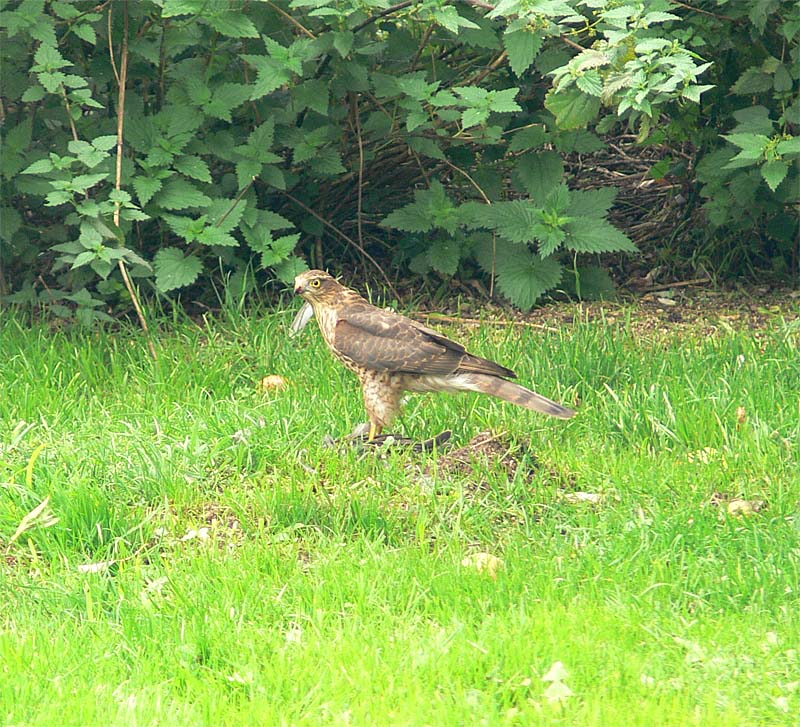
We head in to the Napi valley and stop overlooking a shallow spur. A Hoopoe is calling from the nearside hillside and a Subalpine Warbler song flights below us. A Hooded Crow is mobbing something on the hill. Ian and Steve search intently and find they can see the lower part of a large bird on a rock. ‘Goshawk!’ Ian exclaims. We move position and just get scopes on to a large female Gos when she takes flight, carrying prey. No wonder the Hoodies where going berserk! The Gos disappears into the trees but the Hoodies pursue her and judging by their concentrated efforts she is pitched up somewhere else. We continue watching the actions of the Hoodies whilst scanning for other birds. Suddenly the female Gos breaks cover, flies along the top of the trees and then over the ridge. She’s gone. But how exciting was that whilst it lasted!
 John plays a 'snake it' prank on Steve © John Robinson
 Marsh Frog
Panasonic Lumix DMC-FZ30
Thursday, 3 May
After breakfast we bid farewell to the hotel staff and head off to the East River for an hour or so before heading off to the airport. We concentrate on the ford where there are the usual Stripe-necked Terrapins and a single Temminck’s Stint feeding amongst the handful of Little Stints. The ford also holds Wood Sand, Greenshank and Little Ringed Plover. A Short-toed Eagle drifts over and several Bee-eaters are seen on wires over the other side of the river. An Olivaceous Warbler bounces around the tamarisks behind us collecting nesting material. Three White Storks seek out a thermal in the distance, and no sooner have they found one, they lift up with amazing speed as if in a lift! A single Whiskered Tern appears around the food briefly when Ian (T) finds a Little Bittern sat up for us all to enjoy. The sky is now full of hirundines and swifts and a Black Stork circles in the distance. The whole place is humming and provides a fitting end to our fantastic week on this beautiful island.
We head to the airport where we say farewell to Steve who is staying for another week with wife Liz who is coming out on the plane the group is going home on. Lucky thing!
3 – 10 May – birding holiday with Liz!
After collecting Liz from the airport we head off to the Liminaki (Aiminaki) just down from the airport on the seaward side of the main road. We enjoy an excellent lunch of kalimari and red mullet before heading off to the Agiasos area. We search for orchids and enjoy some of the commoner species (Robin, Song Thrush, etc) not found elsewhere on the island. We also enjoy great views of Serin and Middle Spotted Woodpecker and have a single Eastern Bonelli’s Warbler.
We head off south along the rough track towards Plomari enjoying more commoner species as well as singing Eastern Bonelli’s Warbler.
In the evening we dine at taverna Ambrosia in Skala Kallonis – highly recommended!
Friday, 4 May
After breakfast we head west stopping off briefly at a quiet Devil’s Bridge but enjoy the pair of Red-rumped Swallows flying low around us.
Just beyond Agra we stop for a Short-toed Eagle and fortuitously find a hillside with loads of birds! I find a Golden Oriole then Liz picks up on a single Rock Sparrow. There are loads of Red-backed Shrikes, Spotted Flys and Black-headed Buntings. Rock Nuthatch and Sombre Tit complete the list of goodies. Cricket sp
Panasonic Lumix DMC-FZ30
We take the cattle track from Eresos towards Sigri. At the Meladia ford we enjoy crippling views of the male Baillon’s Crake and a pair of Little Bitterns. The female is out in the open catching fish from a branch above the pool which is very entertaining. The whole area is dripping with shrikes, buntings and flycatchers. We take a walk along the track and out to the scrub by the river edge where I pick up a male Rufous Bushchat which performs well singing from tops of small bushes.
 Female Little Bittern
Leica APO 77 with 20WA & Nikon Coolpix 995 Shepherd herding sheep off a hill
Panasonic Lumix DMC-FZ30
We head in to Sigri and have lunch in taverna Golden Key where we enjoy the week’s best fried shrimps, kalimari and a couple of salads. The view from this taverna is stunning, overlooking Megalonisi Island and the town fort. Another highly recommended taverna! Montpellier Snake
Panasonic Lumix DMC-FZ30
After a visit to the Petrified Forest Museum we head off back along the cattle track to Eresos. On the way to the ford we enjoy more shrikes, including two obliging Lesser Grey, loads of Whinchats and flycatchers and a male Peregrine stooping on a Lesser Kestrel! At the ford we walk out towards the river mouth where we have a singing River Warbler (fourth for trip for me) and then I spot a Roller flying in off the sea! We get great views as it bounces around the coastal scrub before it disappears behind some tall trees. We also search the fig grove and find a really bright Icterine Warbler which sits out sunning itself so we get great scope views. The Baillon’s Crake continued to put on a great performance, this time have a bath right below us!
In the evening we have dinner at Dionysis on the seafront in Skala Kallonis. Recommended.
Saturday, 5 May
 Small Pincertail
Panasonic Lumix DMC-FZ30
Leaving the hotel we see a female Red-footed Falcon near West River.
We take the track up through Potamia valley to Anemotia. It’s a stunning valley and we see the usual shrikes, Middle Spot Wood, buntings etc. A pale Eleanora’s Falcon is the highlight as well as tow circling Black Storks. We find one sheltered section of river with good pools for marsh frogs.

 Different views of Potamia valley
Panasonic Lumix DMC-FZ30
At Filia we see a male Red-footed Falcon and a stunning Large Peacock Moth on the road. This is Europe’s largest moth species – like a huge Emperor moth – but it flutters off before I can get a camera ready. View north from near Anaxos
Panasonic Lumix DMC-FZ30
We have lunch at the Klimataria taverna (OK but nothing to shout about) at the northern end of the Anaxos beach.
We take the coast track between Molivos and Skala Sikaminias enjoying Bee-eaters, shrikes, buntings, dolphins, great views of Orphean and Subalp Warblers and an amazing sight of an adult Audouin’s Gull hawking for insects. At Skala Skiminias we enjoy a coffee and I get my first ever multi sighting of Audouin’s Gull on the island with two adults and a sub-adult around the harbour. Audouin’s Gull hawking insects above us!
Panasonic Lumix DMC-FZ30
We head in to the Napi valley and taking a track at the north end we end up having staggering Oliver Tree Warbler action – Liz’s first views (she’s heard them before) and my best ever views. Only wish I had taken the camera on the walk! As ever, Masked Shrikes are in attendance at the OTW site, as well as Hoopoe and Golden Oriole.
At the Kalloni Saltpans we get good views of a single Glossy Ibis and hear a Quail calling.
On our way across to East River we find a handful of Red-footed Falcons on wires which soon turns to 10 birds (4m, 6f). They look they have only just made landfall. Red-footed Falcons at dusk
Panasonic Lumix DMC-FZ30
Sunday, 6 May
We make it to Inland Lake before breakfast and get good views of a pair of Little Crake and a pair of Little Bittern and good views of a fly-over Hoopoe.
Along East Rover we find an adult Purple Heron, some Little Stints and a Sanderling.
After brekky we head south to Achladeri where we get fab views of a male Kruper’s Nuthatch and Short-toed Treecreeper and a female Masked Shrike on her nest.
 Female Masked Shrike on nest
Leica APO 77 with 20WA & Nikon Coolpix 995
We drive the olive groves towards Skala Polichnitou and get some great Middle Spot Wood action and several singing Olive Tree Warblers.
The S. Polichnitou Saltpans are devoid of birds!
We have lunch at the fish taverna at the Agias Fokas headland just west of Vetera. Black bream and more shrimps and salad. Very, very good and highly recommended.
In the afternoon we take the track east of Vatera up to Ampeliko. A great drive through stunning scenery with laods of Bee-beaters over, Long-legged Buzz and Short-toed Eagle, more Olive Tree Warblers, shrikes and a calling Long-eared Owl. Ampeliko village
Panasonic Lumix DMC-FZ30
An evening walk around the very dry Sheep Fields by the Kalloni Saltpans produces great views of Stone-curlew, more Bee-beaters, Short-toed Larks, 19 Gull-billed Terns (on the pans) and two Grey Plovers. Greater Flamingos
Panasonic Lumix DMC-FZ30
In the evening we eat at Ambrosia (Skala Kallonis) again – fast become our favourite S. Kallonis taverna!
Monday, 7 May Scops Owl
Leica APO 77 with 20WA & Nikon Coolpix 995
We stop north of Kalloni and get great views of a roosting Scops Owl. At the Kalloni Bandstand we arrive as Bob Buckler (Wingspan Bird Tours) is watching a displaying Honey-buzzard with his group. This is Liz’s first Honey-bee and a wing-clapping one at that! Rüppell’s Warbler
Panasonic Lumix DMC-FZ30
At Petra we get stunning views of the Rüppell’s Warbler plus other scrub warblers and our first Thread Lacewing and Rock Grayling. At the reservoir we dip on Fudge Duck but have what is the start of an impressive passage of 150+ Bee-beaters over to the north over the next couple of hours. Thread-winged Lacewing
Panasonic Lumix DMC-FZ30
In Molivos we eat at Onar’s right on the harbour front. Simply our favourite taverna on the island! The Onar salad is a delight, and the stuffed squid (with feta, toms and green pepper) is to die for! During an extended lunch (including the best café latte on the island) Liz finds me only my third Black Kite on Lesvos and we have a Southern Comma sheltering from the strengthening wind. Molivos
Panasonic Lumix DMC-FZ30 Molivos harbour
Panasonic Lumix DMC-FZ30 Southern Comma in Molivos harbour
Panasonic Lumix DMC-FZ30
We head back to the Kalloni area and along the Goat Pit Track get great views of a singing Bushchat. More Orphean Warblers, Sombreros, good views of a first-summer Red-foot and cracking views of a Shortie Eagle. At the top of the track we find a load of Bee-beaters in the valley bottom. Rufous Bushcat
Leica APO 77 with 20WA & Nikon Coolpix 995
East River is full of the usual waders and four adult Med Gulls drift upstream.
In the evening we eat again at Dionysis in S. Kallonis. The tame White Pelican in Skala Kallonis
Panasonic Lumix DMC-FZ30
Tuesday, 8 May
We head straight out to Ipsilou where we have one of the best Cinereous Bunting days I’ve ever had on Lesvos. I made it at least eight singing males and some stunning views. We also manage at least five Icterine Warblers, a couple of Wood Warblers and seven Golden Orioles. Arriving back at the car, a photographer we had seen trampsing around the slopes asked if we had seen any Cinereous Bunts! ‘You’ve just walked past at least eight’ I replied pointing out the song from where we stood. ‘Oh. In that case I have probably photographed one’ he replied. Bloody photographers! With idiots like this around its little wonder as a group they are getting such a bad reputation on the island (along with those who block gates, tracks, fords, etc – it is getting worse every year). From the car we also get good views of displaying Issy Wheats. Spur-thighed Tortoise
Panasonic Lumix DMC-FZ30
We drive down to Eresos and see a Tortoise on the road. We lunch at Adonis at Skala Eresou (very good) and then spend an hour or so drinking very good coffee next door at the bar Agua watching piles of Yelk Shears going past. Sheep collectively wearing a tree as a sunhat!
Panasonic Lumix DMC-FZ30
We drive through Mesotopos and Agra getting great views of a dark Eleanora’s Falcon hunting a hillside, more Cinereous Bunts, Blue Rock Thrush etc. Kalloni Gulf from Makara
We venture down to the Makara headland overlooking Garbia Island on which Lesser Kestrel, Rock Dove and Jackdaw breed. We bird the headland, the wet ford and pool and pick on the usual suspects. There is a huge passage of Alpine Swifts – some below head height when at sea level! A also find some fledged Stonechats and see a single male Sardinian Warbler. Garbias Island from Makara
Panasonic Lumix DMC-FZ30 Crested Lark
Panasonic Lumix DMC-FZ30
In the evening we are back at Dionysis (third time but onlye ‘cos we can’t get into Ambrosia!).
Wednesday, 9 May View from the new hide at Kolloni Saltpans
Panasonic Lumix DMC-FZ30
From the new hide in the NE corner of the Kalloni Saltpans we see a couple of Slender-billed Gulls. Spotted Frillaries
Panasonic Lumix DMC-FZ30
We take a walk along a valley south of Filia and see a single Honey-buzzard and another Eleanora’s Falcon as well as the expected shrikes and warblers. Molivos harbour
Panasonic Lumix DMC-FZ30
We spend our lunch at our favourite Lesvos taverna, Onar’s, on Molivos harbour front. We couldn’t resist another visit on our last full day and we are not disappointed with more stuffed squid and fresh fish – quite marvellous! The art gallery/shop overlooking the harbour is also worth a visit – some cracking Greek and Turkish art in here as well as more usual tourist fare. The hillside village of Sikaminia
Panasonic Lumix DMC-FZ30
We take the road to Sikaminia and at Argones Liz spots a broad wing raptor over the coastline. Scoping it I soon find I’m looking at my first Lesvos Booted Eagle – great stuff. We watch it for over five mins as it circles and drifts slowly east. We see it later from Sikiminia where we also see another Honey-buzz. White Storks at nest at Mandamados
Panasonic Lumix DMC-FZ30
We do a walk in the north Napi valley enjoying a handful of Red-foots, several Balkan Green Lizards and a huge Glass Snake. Female Red-footed Falcon
Leica APO 77 with 20WA & Nikon Coolpix 995
In the evening we dine at the highly rated Taverna Vafios in Vafios near Molivos. The view is fantastic and the taverna more formal and ‘western’ if you will. Food was OK, but was delivered in too quick a time for my liking suggesting that it was not being prepared fresh from scratch. Still recommended though and we will return – probably for lunch so we can enjoy the view more than in the dark! We had Little Owl right by the taverna and a calling Barn Owl.
The drive back to S. Kallonis produced excellent views of Red Fox but not the hoped for Beech Marten. Common Tree Frog – it lived on a white plastic chair on our balcony!
Panasonic Lumix DMC-FZ30
Thursday, 10 May Corn Bunting
Leica APO 77 with 20WA & Nikon Coolpix 995
We bade farewell to our friends at the Pasiphae and head in to the north Napi valley for a couple of hours before heading for the airport. Very little on the wing – Long-legges Buzz, Shortie Eagle and Liz finds me only my third Lesvos Hen Harrier, a ring tail flapping heavily northward.
Thank you Lesvos for yet another memorable spring!