



LIFE
Work! What a shock! And with a headful of snot! First thing is to go and collect the PC which has been at the knackers yard for the last week being checked over - clean bill of health! Now that's a surprise.
GARDEN BIRDS
Sat back at my desk its nice to get reacquainted with my garden birdies. The first broods of Tree Sparrows are out - broods of four and two - and with up to four more pairs out there, it might be a bumper crop of young treeps this year! Hope so. Turtle Doves are still much in evidence, with four birds in the garden for most of the day. There's no chasing and displaying going on, so I presume these are now all males with the females happily settled on eggs. Turts can travel up to 10km for food, so these guys aren't necessarily that local. At least a couple probably are, since I have a pair in residence by the house and another pair at least on the other side of the fen.
Mr Great Spotted Woody is still here - hammering away at my nuts! (Oh er). I still find it staggering that I can have what is a near resident Great Spot in the garden out here in the fens and some birders in suburban Peterborough, next to prime pecker woodlands, rarely get them! What's that about?
Monday, May 31, 2004
LIFE
I would have preferred to spend a second day chillin' with my Mama, but with it being bank holiday and me back at work tomorrow, I needed to get back ahead of the hordes hitting the roads. I set off at 11am and am back home by 4pm - sailed through! Even managed to stop off and do my shopping en route.
Hit the garden - grass always grows twice as fast when you're away, and then spent a nice evening with nextdoor neighbours Debbie and Tony munching on their b-b-q grub - thanks guys! Tony had music 'piped' through to the garden - non-stop tracks. He tells me its Q radio via the satellite - gotta check that out for those nights sat tapping away at this thing!
I would have preferred to spend a second day chillin' with my Mama, but with it being bank holiday and me back at work tomorrow, I needed to get back ahead of the hordes hitting the roads. I set off at 11am and am back home by 4pm - sailed through! Even managed to stop off and do my shopping en route.
Hit the garden - grass always grows twice as fast when you're away, and then spent a nice evening with nextdoor neighbours Debbie and Tony munching on their b-b-q grub - thanks guys! Tony had music 'piped' through to the garden - non-stop tracks. He tells me its Q radio via the satellite - gotta check that out for those nights sat tapping away at this thing!
Sunday, May 30, 2004
LIFE
I spend a rare day with my Mum in Exeter. I've come down with a stinking cold, so its just really great to chill for the day with her - had a lay in, lazy breakfast, read the Sunday papers (major luxury!), watched the (boring!) grand prix, chatted, ate too much (but not enough of the lamb dinner tho!), etc! What a fab day. Thanks Mama.
I spend a rare day with my Mum in Exeter. I've come down with a stinking cold, so its just really great to chill for the day with her - had a lay in, lazy breakfast, read the Sunday papers (major luxury!), watched the (boring!) grand prix, chatted, ate too much (but not enough of the lamb dinner tho!), etc! What a fab day. Thanks Mama.
Saturday, May 29, 2004
BIRDING TRIP – ISLES OF SCILLY (A SPEYSIDE WILDLIFE HOLIDAY)
Yesterday's grim weather has passed, and a return to normal - sunny, warm and wall to wall blue sky!
The reduced group of Pam, Phil, John, Margaret, Alison and Steve take a walk out to Peninnis Head. With a red-backed Shrike found on St Agnes the previous day, the hope of finding a few newly arrived migrants is raised. But dashed! Its soon obvious that nothing has dropped in, at least not on this headland, and we make do with the resident birds including the ever-friendly Song Thrushes hopping ahead of us on the paths. At the head, we manage to catch sight of a few Fulmars and Gannets over the flat sea (hope it stays that way for our crossing later!). The headland is covered in Common Blue butterflies and the occasional Small Copper. With birds difficult to come by we revert to our own method of finding new species - birding charades!
We head back through Hugh Town and up to the Garrison where we have a leisurely lunch by the Newman Battery with spectacular views across to the Western Rocks, Annet, Bishop Rock Lighthouse, Samson, Bryher, Tresco, Tean and St Martin's (only St Agnes is missing!). A group of Herring Gulls join us, but are a little wary of coming down to the few bits of bread thrown down for them.
After lunch its back to town to collect our things from the guesthouse. Ice creams in hand, we claim a corner of the green which overlooks Town Beach and the harbour. From here we can see when the Scillonian II arrives and saves us having to stand in the queue on the quay for a long time. As it happens, the boat is delayed on its return from Penzance, and we don’t leave St Mary's until 18.45h – nearly two hours late!
The sea is relatively flat and with increasingly overcast skies, the hopes for a few seabirds is heightened. Fulmars and Gannets are much in evidence, but it isn’t until we are in sight of Longships Lighthouse just off Land's End that we come across Manx Shearwaters. Steve spots a Storm Petrel, but its so quick and flying away from us there is little chance for the other to get on to it. More Manxies stream past in line after line – some coming quite close to the boat ad giving excellent views, and sightings continue almost to Penzance Harbour.
Arriving back at Penzance after 21.00h everyone is keen to claim their luggage and get to their guesthouse or start their journey. Our bags quickly materialise from the large cargo containers, and we are soon bidding one another a fond farewell.
Yesterday's grim weather has passed, and a return to normal - sunny, warm and wall to wall blue sky!
The reduced group of Pam, Phil, John, Margaret, Alison and Steve take a walk out to Peninnis Head. With a red-backed Shrike found on St Agnes the previous day, the hope of finding a few newly arrived migrants is raised. But dashed! Its soon obvious that nothing has dropped in, at least not on this headland, and we make do with the resident birds including the ever-friendly Song Thrushes hopping ahead of us on the paths. At the head, we manage to catch sight of a few Fulmars and Gannets over the flat sea (hope it stays that way for our crossing later!). The headland is covered in Common Blue butterflies and the occasional Small Copper. With birds difficult to come by we revert to our own method of finding new species - birding charades!
We head back through Hugh Town and up to the Garrison where we have a leisurely lunch by the Newman Battery with spectacular views across to the Western Rocks, Annet, Bishop Rock Lighthouse, Samson, Bryher, Tresco, Tean and St Martin's (only St Agnes is missing!). A group of Herring Gulls join us, but are a little wary of coming down to the few bits of bread thrown down for them.
After lunch its back to town to collect our things from the guesthouse. Ice creams in hand, we claim a corner of the green which overlooks Town Beach and the harbour. From here we can see when the Scillonian II arrives and saves us having to stand in the queue on the quay for a long time. As it happens, the boat is delayed on its return from Penzance, and we don’t leave St Mary's until 18.45h – nearly two hours late!
The sea is relatively flat and with increasingly overcast skies, the hopes for a few seabirds is heightened. Fulmars and Gannets are much in evidence, but it isn’t until we are in sight of Longships Lighthouse just off Land's End that we come across Manx Shearwaters. Steve spots a Storm Petrel, but its so quick and flying away from us there is little chance for the other to get on to it. More Manxies stream past in line after line – some coming quite close to the boat ad giving excellent views, and sightings continue almost to Penzance Harbour.
Arriving back at Penzance after 21.00h everyone is keen to claim their luggage and get to their guesthouse or start their journey. Our bags quickly materialise from the large cargo containers, and we are soon bidding one another a fond farewell.
Friday, May 28, 2004
BIRDING TRIP – ISLES OF SCILLY (A SPEYSIDE WILDLIFE HOLIDAY)
Overnight the islands have been lashed by wind and rain and we wake to an overcast and drizzly morning. We take a taxi mini-bus up to Pelistry and then a gentle meander along Pelistry Lane to Green Farm and down Green Lane to the coast. It begins to rain and most move faster than they have all week to reach for their waterproofs from their rucksacks! By the time everyone is zipped and hooded up its stopped raining! Still, everyone (bar Ray and Steve) are ready for the next shower.
At the coast we find the usual array of residents including Wren, Greenfinches, Linnet, Oystercatcher and two Shelduck. A Grey Seal bobs in the bay below us, trying its best to look like a buoy. The view across to St Martin's and the Eastern Isles is fantastic, even in the mirkiness of today.
We walk along to Watermill Cove and up to the burial chamber at Innisidgen where we take in the 3000-year-old tomb and again enjoy the views across to the other islands. The Scillonian III sails past, bringing another boatload of holidaymakers to the islands. A lone Kittiwake wanders in front of the boat and a huge flock of Shags fly low across the sea in front of us.
We walk through the pines towards Trenowerth and come across a lone Swift feeding low over the trees, sweeping back and forth on its sickle-shaped wings. Two Turtle Doves take off from a nearby tree and fly around before landing back in one of the large pines. One bird is viewable, and Steve soon has his scope on the bird and most get a good look before it takes flight.
The walk down to Telegraph is peppered with fine showers, but the trees at the Brant's Carn provides shelter for lunch - with yet another astounding view, this time overlooking Bar Point on St Mary's pointing out across to Tresco. A Stonechat and a Blackbird provide bird interest while we feed our faces.
We take the path around the seaward side of the golf course which is dotted with more Linnets and a couple of fine male Stonechats before arriving at JulietÂ’s Garden for a welcome hot drink and slice of cake.
We bid farewell to Ian, Sylvia and Graham who are leaving early to make haste to their newly arrived grand-daughter (or niece in Graham's case). Ray is also leaving early to get back home to Scotland to begin his own holiday with wife Anne and friends.
The remaining six of us head off in the mizzle down along the Lower Moor trail to the hide (taking in Porthloo Duck Pond and its collection of exotica. No you can't count the Wood Duck Phil!). The continued cool and dampness of the day is having its toll on the wildlife, with virtually nothing seen en-route. At the hide we do at least get good views of a Grey Heron stalking the reed fringe in search of prey.
With little sign of the drizzle lessening, we head back to town for a spot of prezzie-purchasing and early return to the guesthouse. After dinner the checklist is forsaken for the men's Pilot Gig race. We wander down to the quay in the brightening skies to join the race goers and enjoy the atmosphere of the being at in the thick of the action as the boats battle round the triangular course, with Golden Eagle taking first place. We wander back to the guesthouse in good mood and to prepare for our final day and departure tomorrow.
Overnight the islands have been lashed by wind and rain and we wake to an overcast and drizzly morning. We take a taxi mini-bus up to Pelistry and then a gentle meander along Pelistry Lane to Green Farm and down Green Lane to the coast. It begins to rain and most move faster than they have all week to reach for their waterproofs from their rucksacks! By the time everyone is zipped and hooded up its stopped raining! Still, everyone (bar Ray and Steve) are ready for the next shower.
At the coast we find the usual array of residents including Wren, Greenfinches, Linnet, Oystercatcher and two Shelduck. A Grey Seal bobs in the bay below us, trying its best to look like a buoy. The view across to St Martin's and the Eastern Isles is fantastic, even in the mirkiness of today.
We walk along to Watermill Cove and up to the burial chamber at Innisidgen where we take in the 3000-year-old tomb and again enjoy the views across to the other islands. The Scillonian III sails past, bringing another boatload of holidaymakers to the islands. A lone Kittiwake wanders in front of the boat and a huge flock of Shags fly low across the sea in front of us.
We walk through the pines towards Trenowerth and come across a lone Swift feeding low over the trees, sweeping back and forth on its sickle-shaped wings. Two Turtle Doves take off from a nearby tree and fly around before landing back in one of the large pines. One bird is viewable, and Steve soon has his scope on the bird and most get a good look before it takes flight.
The walk down to Telegraph is peppered with fine showers, but the trees at the Brant's Carn provides shelter for lunch - with yet another astounding view, this time overlooking Bar Point on St Mary's pointing out across to Tresco. A Stonechat and a Blackbird provide bird interest while we feed our faces.
We take the path around the seaward side of the golf course which is dotted with more Linnets and a couple of fine male Stonechats before arriving at JulietÂ’s Garden for a welcome hot drink and slice of cake.
We bid farewell to Ian, Sylvia and Graham who are leaving early to make haste to their newly arrived grand-daughter (or niece in Graham's case). Ray is also leaving early to get back home to Scotland to begin his own holiday with wife Anne and friends.
The remaining six of us head off in the mizzle down along the Lower Moor trail to the hide (taking in Porthloo Duck Pond and its collection of exotica. No you can't count the Wood Duck Phil!). The continued cool and dampness of the day is having its toll on the wildlife, with virtually nothing seen en-route. At the hide we do at least get good views of a Grey Heron stalking the reed fringe in search of prey.
With little sign of the drizzle lessening, we head back to town for a spot of prezzie-purchasing and early return to the guesthouse. After dinner the checklist is forsaken for the men's Pilot Gig race. We wander down to the quay in the brightening skies to join the race goers and enjoy the atmosphere of the being at in the thick of the action as the boats battle round the triangular course, with Golden Eagle taking first place. We wander back to the guesthouse in good mood and to prepare for our final day and departure tomorrow.
Thursday, May 27, 2004
BIRDING TRIP – ISLES OF SCILLY (A SPEYSIDE WILDLIFE HOLIDAY)
Early morning low cloud gives way to brilliant sunshine by the time we make our way to the quay to take the boat to Tresco. We land at New Grimsby, and after a quick look around the gallery, we head on towards the Great Pool. Four Swifts circle over Abbey Farm and a Goldcrest sings at the junction with Racket Town Lane. We walk slowly along Pool Road seeing Chaffinches, Linnets and Goldfinches feeding in the trees and fields. At the turn for the hide a Blackcap is singing but it is in thick cover and we fail to locate it. From the hide we see Mute Swan, Gadwall and Shelduck, but it is wader-free and we continue along Pool Road where we come across our second singing Blackcap. We eventually find him, but he proves extremely difficult to see and a Dunnock adds to the confusion. We continue down to Rowesfield where we are greeted by another singing Blackcap. A full-scale search ensues and most (but not all!) eventually get a glimpse of the songster.
We have lunch in the sun by the southern end of the Great Pool in the company of a family of Shelduck. As we finish lunch all the gulls, ducks and Oystercatchers take flight noisily from Abbey Pool. We search the sky but canÂ’t see what has put them all up. We make our way round to Abbey Pool which now holds far fewer birds, but a single Grey Heron and a first-summer Black-headed Gull are among the few birds left on the pool. Ray then picks up a raptor to the north over Lizard Point. It's a male Marsh Harrier and we all get scope views as it circles before heading off low towards St Martin's.
At the Abbey Gardens we split in to two groups. Ray goes in to the gardens with Sylvia, Ian, John and Alison while Steve continues the walk around the island with Pam, Phil, Margaret and Graham.
Ray's group enjoy the gardens (complete with Blackcap) before visiting Appletree Point to look for terns before walking back along the beach to Plumb Hill and back to New Grimsby for the
boat.
Steve's group walk along Borough Road, through Borough Farm and down to Old Grimsby. It is very quiet and apart from plenty of very fat Pheasants and a Red-legged Partridge, little else is seen before we take a break in the Island Hotel garden for a drink before joining the others at the quay.
The return trip to St Mary's is brightened up with a quick visit to Samson to pick a couple of day-trippers to the island. Just offshore Puffin Island, a Grey Seal is receiving a lot of attention from the gulls. The boat cruises within meters of the seal and we see it is feasting on a Conger Eel! Fantastic! The seal rolls on the surface with the half-eaten eel but the gulls donÂ’t look too keen on getting too close to the action and keep a respectable distance.
We return to St Mary's, and after freshening up head up to Juliet's Garden for a splendid evening - our last all together as we lose Sylvia, Ian, Graham and Ray in tomorrow afternoon.
Early morning low cloud gives way to brilliant sunshine by the time we make our way to the quay to take the boat to Tresco. We land at New Grimsby, and after a quick look around the gallery, we head on towards the Great Pool. Four Swifts circle over Abbey Farm and a Goldcrest sings at the junction with Racket Town Lane. We walk slowly along Pool Road seeing Chaffinches, Linnets and Goldfinches feeding in the trees and fields. At the turn for the hide a Blackcap is singing but it is in thick cover and we fail to locate it. From the hide we see Mute Swan, Gadwall and Shelduck, but it is wader-free and we continue along Pool Road where we come across our second singing Blackcap. We eventually find him, but he proves extremely difficult to see and a Dunnock adds to the confusion. We continue down to Rowesfield where we are greeted by another singing Blackcap. A full-scale search ensues and most (but not all!) eventually get a glimpse of the songster.
We have lunch in the sun by the southern end of the Great Pool in the company of a family of Shelduck. As we finish lunch all the gulls, ducks and Oystercatchers take flight noisily from Abbey Pool. We search the sky but canÂ’t see what has put them all up. We make our way round to Abbey Pool which now holds far fewer birds, but a single Grey Heron and a first-summer Black-headed Gull are among the few birds left on the pool. Ray then picks up a raptor to the north over Lizard Point. It's a male Marsh Harrier and we all get scope views as it circles before heading off low towards St Martin's.
At the Abbey Gardens we split in to two groups. Ray goes in to the gardens with Sylvia, Ian, John and Alison while Steve continues the walk around the island with Pam, Phil, Margaret and Graham.
Ray's group enjoy the gardens (complete with Blackcap) before visiting Appletree Point to look for terns before walking back along the beach to Plumb Hill and back to New Grimsby for the
boat.
Steve's group walk along Borough Road, through Borough Farm and down to Old Grimsby. It is very quiet and apart from plenty of very fat Pheasants and a Red-legged Partridge, little else is seen before we take a break in the Island Hotel garden for a drink before joining the others at the quay.
The return trip to St Mary's is brightened up with a quick visit to Samson to pick a couple of day-trippers to the island. Just offshore Puffin Island, a Grey Seal is receiving a lot of attention from the gulls. The boat cruises within meters of the seal and we see it is feasting on a Conger Eel! Fantastic! The seal rolls on the surface with the half-eaten eel but the gulls donÂ’t look too keen on getting too close to the action and keep a respectable distance.
We return to St Mary's, and after freshening up head up to Juliet's Garden for a splendid evening - our last all together as we lose Sylvia, Ian, Graham and Ray in tomorrow afternoon.
Wednesday, May 26, 2004
BIRDING TRIP – ISLES OF SCILLY (A SPEYSIDE WILDLIFE HOLIDAY)
Oh no its another gorgeous day! Just the ticket for our visit to St Agnes.
We arrive on the quay to the standard Wren salute (every quay on Scilly has one) and a Cuckoo flies over towards the island of Gugh (pronounced Goo). We walk down to Porth Killier to be greeted with news of a Rose-coloured (Rosy) Starling. But the bird has flown to the other side of the bay. We scan the far shore when Ray spots the Rosy Starling flying off towards the cricket pitch. We head that way when Steve sees it fly back and over to nearby Browarth Point. We trek round to the point but no sign. We follow the point back round to Porth Killier, and, surprise, surprise, the Rosy Starling is back with the Starling flock feeding on the beach where it was first seen! We view the bird as it feeds on the seaweed with the other Starlings until it flies off again. We decide to reposition ourselves by the beach where all the Starlings are feeding. As we head round we stop to look at a Cinnabar moth when a Common Sandpiper takes flight from some nearby rocks. It lands amongst the gulls and searching for it we find a single Whimbrel roosting up on the rocks. On the nearby beach we also find four summer-plumage Sanderling and eight Dunlin. We get our best views of Rock Pipit as one struts its stuff right in front of us on the beach.
Arriving at the 'Starling' beach, we find the Rosy Starling back on the seaweed feeding with the Starlings. Its plumage isnÂ’t that bright, the pale areas only having a hint of pink suggesting it is a first summer bird (hatched last year). Its still got a pink bill though, which proves useful when you can only see its head behind a mound of seaweed is very useful in picking it out from the yellow-billed Starlings. We get tremendous views before it again flies away which is our queue to find a sheltered sunny spot for lunch.
Crossing the cricket pitch a Turtle Dove does a fly-by, a Spotted Flycatcher is feeding under the Tamarisks and a Barnacle Goose of questionable origin is on the Big Pool, before arriving at Periglis. The beach is quiet apart from a couple of sun-seekers, and is perfect for lunch. Our view of the southern tip of Annet and out to the Western Rocks and the Bishop Rock Lighthouse is stunning. The sun beats down on us and there is hardly a ripple on the water in the cove. John and Margaret can't resist a paddle, and next minute they have their boots off, trousers rolled up and are waltzing in the shallows! What's that about mad dogs and English men going out in the midday sun? A Whimbrel on the rocks provides a brief snippet of birding interest.
After lunch we walk up to Lower Town and across to the 'Nag's Head' a wind-carved stone overlooking St WarnaÂ’s Cove. A Light Emerald moth flutters around our feet and we try hard to pin down a Meadow Pipit but none are that obliging. We head round to Wingletang where we get good views of a couple of Stonechats. Our second Cuckoo sighting of the day is a bird being pursued by Meadow Pipits. We walk through the dappled shade of Barnaby's Lane to Covean Tea Garden where most of us part-take in a spot of ice cream indulgence and a spot of afternoon tea. Steve of course can't have a cone like everyone else, and has to be greedy with a four-scoop sundae! All refreshed we take a stroll over The Bar to Gugh. On the Gugh end of The Bar is a fine spread of Sea Holly, and at Carn Bite we eventually catch up with Scilly Bee.
We catch the boat back to St Mary's, and after dinner, we walk up to the Star Castle on the Garrison to watch the woman's pilot gig race. This soon takes on a competitive feel when we learn that Eva, one of the waitresses from our guesthouse, is racing in the Tregarthen gig. Getting into the swing of the race we cheer on Tregarthen to an honourable fifth place.
Oh no its another gorgeous day! Just the ticket for our visit to St Agnes.
We arrive on the quay to the standard Wren salute (every quay on Scilly has one) and a Cuckoo flies over towards the island of Gugh (pronounced Goo). We walk down to Porth Killier to be greeted with news of a Rose-coloured (Rosy) Starling. But the bird has flown to the other side of the bay. We scan the far shore when Ray spots the Rosy Starling flying off towards the cricket pitch. We head that way when Steve sees it fly back and over to nearby Browarth Point. We trek round to the point but no sign. We follow the point back round to Porth Killier, and, surprise, surprise, the Rosy Starling is back with the Starling flock feeding on the beach where it was first seen! We view the bird as it feeds on the seaweed with the other Starlings until it flies off again. We decide to reposition ourselves by the beach where all the Starlings are feeding. As we head round we stop to look at a Cinnabar moth when a Common Sandpiper takes flight from some nearby rocks. It lands amongst the gulls and searching for it we find a single Whimbrel roosting up on the rocks. On the nearby beach we also find four summer-plumage Sanderling and eight Dunlin. We get our best views of Rock Pipit as one struts its stuff right in front of us on the beach.
Arriving at the 'Starling' beach, we find the Rosy Starling back on the seaweed feeding with the Starlings. Its plumage isnÂ’t that bright, the pale areas only having a hint of pink suggesting it is a first summer bird (hatched last year). Its still got a pink bill though, which proves useful when you can only see its head behind a mound of seaweed is very useful in picking it out from the yellow-billed Starlings. We get tremendous views before it again flies away which is our queue to find a sheltered sunny spot for lunch.
Crossing the cricket pitch a Turtle Dove does a fly-by, a Spotted Flycatcher is feeding under the Tamarisks and a Barnacle Goose of questionable origin is on the Big Pool, before arriving at Periglis. The beach is quiet apart from a couple of sun-seekers, and is perfect for lunch. Our view of the southern tip of Annet and out to the Western Rocks and the Bishop Rock Lighthouse is stunning. The sun beats down on us and there is hardly a ripple on the water in the cove. John and Margaret can't resist a paddle, and next minute they have their boots off, trousers rolled up and are waltzing in the shallows! What's that about mad dogs and English men going out in the midday sun? A Whimbrel on the rocks provides a brief snippet of birding interest.
After lunch we walk up to Lower Town and across to the 'Nag's Head' a wind-carved stone overlooking St WarnaÂ’s Cove. A Light Emerald moth flutters around our feet and we try hard to pin down a Meadow Pipit but none are that obliging. We head round to Wingletang where we get good views of a couple of Stonechats. Our second Cuckoo sighting of the day is a bird being pursued by Meadow Pipits. We walk through the dappled shade of Barnaby's Lane to Covean Tea Garden where most of us part-take in a spot of ice cream indulgence and a spot of afternoon tea. Steve of course can't have a cone like everyone else, and has to be greedy with a four-scoop sundae! All refreshed we take a stroll over The Bar to Gugh. On the Gugh end of The Bar is a fine spread of Sea Holly, and at Carn Bite we eventually catch up with Scilly Bee.
We catch the boat back to St Mary's, and after dinner, we walk up to the Star Castle on the Garrison to watch the woman's pilot gig race. This soon takes on a competitive feel when we learn that Eva, one of the waitresses from our guesthouse, is racing in the Tregarthen gig. Getting into the swing of the race we cheer on Tregarthen to an honourable fifth place.
Tuesday, May 25, 2004
BIRDING TRIP – ISLES OF SCILLY (A SPEYSIDE WILDLIFE HOLIDAY)
We again wake to a brilliant sunny day and head off to Bryher. During the crossing we see a single Guillemot, two Razorbills and several Common Terns. We make a brief stop at Samson to ferry a small number of visitors to this inhabited isle. Opportune, as the beach we pull up by holds a small number of Sanderling running around tideline and three Bar-tailed Godwits. Two Whimbrel take flight providing good views as they head past the boat. The nearby offshore rocks are dotted with a handful of Common Terns.
Arriving at Church Quay, Bryher a single Jackdaw is circling over Watch Hill. We disembark search the fields around the camp site for a Red-backed Shrike seen yesterday, but despite our (and another group's) best efforts, we fail to find it. Linnets are again plentiful and a single male Stonechat is seen.
We walk round to the Great Pool which holds a single Mute Swan and on towards Shipman Head Down where a Hooded Crow flies over. The first of the day's small passage of Swifts is seen among the many House Martins and Swallows. As we make our way up to past Great popplestone, the gulls from the off-island Gweal go mad and an Osprey appears above us. The bird heads slowly northwards before turning round and again drifting right over us giving fantastic views.
We arrive on Shipman Head Down where a Short-toed Lark has been seen. Over lunch Steve and Ray search the down for the lark but no joy. Attention is diverted by a Cuckoo perched up in a bush in the valley below us. More Swifts and hirundines drift over and the gulls on the nearby island are again up and calling frantically. The Osprey reappears over Gweal causing more mayhem, but order is soon restored when it drifts off to the north.
The Short-toed Lark flies past us and drops on to the Down a couple of hundred yards away. We reposition ourselves and after a few moments it appears on a clump of heather and we get views of this sandy little lark through the heat haze before it again takes flight. Searching for it a Wheatear is found, but it too quickly disappears.
We stop to look over the fantastically named Hell Bay before heading back towards the Great Pool. Butterflies are much in evidence in the searing sun, with Common Blues all over the down and Peacock and Red Admiral along the lanes and several brilliant metallic green Rose Chaffers are also seen. With the sun beating down we give in to temptation and retire to the Hell Bay Hotel for a much needed rest and drink (and enjoy the fabulous art!). A Common Tern and Shelduck on the adjacent Great Pool provide interest, as do the hotel garden Blackbird, Song Thrush and Starling. The latter gets our pulses racing with a cracking impersonation of a Whimbrel!
Suitably replenished and rested, we head back towards The Town where we bump into a single Turtle Dove within a flock of 20 or so Collared Doves. The Collared Doves are feeding in a garden but take cover in some pines as we approach, the smaller, darker Turtle Dove standing out in flight due to its dark tail with brilliant white sides. We hang around and eventually the doves make their way back to the garden, and so follows the Turtle Dove, giving splendid flight views before it disappears in to the garden.
We leave the island via AnnekaÂ’s Quay, built for one of the Challenge Anneka (Rice) TV programmes in the early 1990s. On the way back we see more Common Terns and handful of Razorbills on the sea.
Arriving back on St Mary's we head back to the guesthouse to prepare for dinner, all glowing from the day's strong sun, and all smiling following an excellent day on a jewel of an island.
We again wake to a brilliant sunny day and head off to Bryher. During the crossing we see a single Guillemot, two Razorbills and several Common Terns. We make a brief stop at Samson to ferry a small number of visitors to this inhabited isle. Opportune, as the beach we pull up by holds a small number of Sanderling running around tideline and three Bar-tailed Godwits. Two Whimbrel take flight providing good views as they head past the boat. The nearby offshore rocks are dotted with a handful of Common Terns.
Arriving at Church Quay, Bryher a single Jackdaw is circling over Watch Hill. We disembark search the fields around the camp site for a Red-backed Shrike seen yesterday, but despite our (and another group's) best efforts, we fail to find it. Linnets are again plentiful and a single male Stonechat is seen.
We walk round to the Great Pool which holds a single Mute Swan and on towards Shipman Head Down where a Hooded Crow flies over. The first of the day's small passage of Swifts is seen among the many House Martins and Swallows. As we make our way up to past Great popplestone, the gulls from the off-island Gweal go mad and an Osprey appears above us. The bird heads slowly northwards before turning round and again drifting right over us giving fantastic views.
We arrive on Shipman Head Down where a Short-toed Lark has been seen. Over lunch Steve and Ray search the down for the lark but no joy. Attention is diverted by a Cuckoo perched up in a bush in the valley below us. More Swifts and hirundines drift over and the gulls on the nearby island are again up and calling frantically. The Osprey reappears over Gweal causing more mayhem, but order is soon restored when it drifts off to the north.
The Short-toed Lark flies past us and drops on to the Down a couple of hundred yards away. We reposition ourselves and after a few moments it appears on a clump of heather and we get views of this sandy little lark through the heat haze before it again takes flight. Searching for it a Wheatear is found, but it too quickly disappears.
We stop to look over the fantastically named Hell Bay before heading back towards the Great Pool. Butterflies are much in evidence in the searing sun, with Common Blues all over the down and Peacock and Red Admiral along the lanes and several brilliant metallic green Rose Chaffers are also seen. With the sun beating down we give in to temptation and retire to the Hell Bay Hotel for a much needed rest and drink (and enjoy the fabulous art!). A Common Tern and Shelduck on the adjacent Great Pool provide interest, as do the hotel garden Blackbird, Song Thrush and Starling. The latter gets our pulses racing with a cracking impersonation of a Whimbrel!
Suitably replenished and rested, we head back towards The Town where we bump into a single Turtle Dove within a flock of 20 or so Collared Doves. The Collared Doves are feeding in a garden but take cover in some pines as we approach, the smaller, darker Turtle Dove standing out in flight due to its dark tail with brilliant white sides. We hang around and eventually the doves make their way back to the garden, and so follows the Turtle Dove, giving splendid flight views before it disappears in to the garden.
We leave the island via AnnekaÂ’s Quay, built for one of the Challenge Anneka (Rice) TV programmes in the early 1990s. On the way back we see more Common Terns and handful of Razorbills on the sea.
Arriving back on St Mary's we head back to the guesthouse to prepare for dinner, all glowing from the day's strong sun, and all smiling following an excellent day on a jewel of an island.
Monday, May 24, 2004
BIRDING TRIP – ISLES OF SCILLY (A SPEYSIDE WILDLIFE HOLIDAY)
We head to St Martin's in brilliant sunshine and under a blue cloudless sky. As we pass the St Mary's Golf Course Steve picks up a Peregrine wheeling above the rocks which gives us good views.
We land at Higher Town and are greeted by a showy Wren singing from the top of a patch of brambles. We head east along the south of the island. The trees and fields behind the cricket pitch offer only sparrows and Starlings, while the cricket pitch itself is dotted with half a dozen Blackbirds and a Song Thrush. By the pool, four Linnets land on the bushes, one male in particular looking dapper and bright, showing off his red forehead, chestnut back, grey head and red chest. A Cuckoo is calling constantly from Chapel Down direction, and after some searching, Ray picks it up sat on the side of a distant bush.
We continue round to English Island Point from where we view the sea across to the Eastern Isles. Kittiwakes are flitting back and forth and the right hand of the Chimney Rocks is covered Shags. At least three Grey Seals are bobbing up and down in the swell just off Nornour. A small passage of hirundines includes a lone Sand Martin. We continue our walk through the coconut-scented Gorse of Chapel Down. Here and there Honeysuckle is coming in to flower and few can resist a sniff of the sweet scented flowerheads. Below us a territorial pair of Ringed Plovers chase an intruder off their beach and a handful of Oystercatchers chase each other around in their usual noisy fashion.
We arrive at Chapel Brow and have our lunch overlooking the superbly named Bread & Cheese Cove. The view west long the north side of St Martin's is breathtaking. Round Island Lighthouse can be seen in the distance, as can the sandy beach of Pentle Bay on Tresco. A couple of Fulmars fly back and forth below us when Ray shouts 'Magpie!' There on the rocks is the Magpie that took up residence on the island in October 2003. 'With only around six records in the last 30 or so years, this is probably the rarest bird we will see all week' says Steve, who is more than pleased with the addition to his Scilly list! Looking south a group of Swifts and hirundines appear, slowly working their way towards us. There are around 20+ Swifts, House Martins and Swallows, and low over the bracken slopes of Chapel Down a couple of Sand Martins.
We wind our way slowly back across to the island to Lower Town. The sun is high, the sky blue and it must be getting warm as Graham takes off his coat! The high pressure and high temperatures provide great weather for walking and enjoying the stunning views, but are far from ideal for watching migrant birds - there simply aren't any. Steve explains that during periods of high pressure migrants pass through at high altitudes taking advantage of the fine weather, and what is needed is some unsettled weather and overcast skies to bring a few birds down on to the islands.
We arrive at Lower Town in good time for the return boat to St Mary's, so take a welcome break and drink in the garden of the St Martin's Hotel.
After dinner, most of us make our way down to the quay for Scilly Birdman, Will Wagstaff's, Shearwater boat trip. Just as we begin to board the Osprey (the boat), Ray notices all the gulls in the harbour are up and going berserk. 'Osprey!' he shouts pointing to the sky. Few seem to react so Steve hollers 'Osprey! Not the boat, the bird - flying over the harbour!' That did the trick, and most of 60 or so queuing for the boat manage to see this great raptor before it heads off northwards.
We head out towards Annet. Kittiwakes and other gulls are spotted, and a couple of Guillemots fly by. It isn't long before we see our first distant Manx Shearwater. A few more birds later, a party of five shearwaters cut across the front of the boat and come down the left hand side giving superb views as they bank from side to side turning from black to white with each twist.
We arrive at Annet, the main seabird island of the archipelago. This island was once home to hundreds of thousands of Puffins, but today holds only a 100 or so pairs. In North East Porth we come across several birds on the sea and pull up along side these 'sea clowns'. As we watch the birds on the water, about a dozen birds are zooming around in preparation to head back to their burrows. The mini cliffs are home to nesting Fulmars, and the island is dotted with Herring, Lesser Black-backed and Great Black-backed Gulls. The grassy top of the islands is where the Manx Shearwaters breed, and the boulder beaches are the nesting areas for the tiny Storm Petrel. We head off in to open water to see if we can find more Manx Shearwaters. Each night, the Manxies gather on the sea at dusk and wait until darkness falls before returning to their burrows to avoid being predated by the large gulls on the island. Overcast nights are best, when the light of the moon is blocked out, so clear night such as tonight arenÂ’t ideal, but we have already seen a dozen or so birds flying around, so we should hopefully find a some sat up on the surface. We zig-zag around and eventually find a group of five birds sat on the water. We manage to creep up to within a 100 yards or so and get great views before they take flight and wheel off, shearing away from us.
Time is pressing on and the sun dips below the horizon and as athe temperature drops we head back to St Mary's. Behind us we pick up about a dozen Manxies in flight and are staggered to see the lead bird chasing a large falcon low over the water (thatÂ’s one brave Manxie!). The falcon is enormous and is the Saker-type bird that has been seen in recent weeks around the island.
We arrive back at the quay thrilled with our evening's birding, and all hurry back to the warmth of the guesthouse for a warming hot drink!
We head to St Martin's in brilliant sunshine and under a blue cloudless sky. As we pass the St Mary's Golf Course Steve picks up a Peregrine wheeling above the rocks which gives us good views.
We land at Higher Town and are greeted by a showy Wren singing from the top of a patch of brambles. We head east along the south of the island. The trees and fields behind the cricket pitch offer only sparrows and Starlings, while the cricket pitch itself is dotted with half a dozen Blackbirds and a Song Thrush. By the pool, four Linnets land on the bushes, one male in particular looking dapper and bright, showing off his red forehead, chestnut back, grey head and red chest. A Cuckoo is calling constantly from Chapel Down direction, and after some searching, Ray picks it up sat on the side of a distant bush.
We continue round to English Island Point from where we view the sea across to the Eastern Isles. Kittiwakes are flitting back and forth and the right hand of the Chimney Rocks is covered Shags. At least three Grey Seals are bobbing up and down in the swell just off Nornour. A small passage of hirundines includes a lone Sand Martin. We continue our walk through the coconut-scented Gorse of Chapel Down. Here and there Honeysuckle is coming in to flower and few can resist a sniff of the sweet scented flowerheads. Below us a territorial pair of Ringed Plovers chase an intruder off their beach and a handful of Oystercatchers chase each other around in their usual noisy fashion.
We arrive at Chapel Brow and have our lunch overlooking the superbly named Bread & Cheese Cove. The view west long the north side of St Martin's is breathtaking. Round Island Lighthouse can be seen in the distance, as can the sandy beach of Pentle Bay on Tresco. A couple of Fulmars fly back and forth below us when Ray shouts 'Magpie!' There on the rocks is the Magpie that took up residence on the island in October 2003. 'With only around six records in the last 30 or so years, this is probably the rarest bird we will see all week' says Steve, who is more than pleased with the addition to his Scilly list! Looking south a group of Swifts and hirundines appear, slowly working their way towards us. There are around 20+ Swifts, House Martins and Swallows, and low over the bracken slopes of Chapel Down a couple of Sand Martins.
We wind our way slowly back across to the island to Lower Town. The sun is high, the sky blue and it must be getting warm as Graham takes off his coat! The high pressure and high temperatures provide great weather for walking and enjoying the stunning views, but are far from ideal for watching migrant birds - there simply aren't any. Steve explains that during periods of high pressure migrants pass through at high altitudes taking advantage of the fine weather, and what is needed is some unsettled weather and overcast skies to bring a few birds down on to the islands.
We arrive at Lower Town in good time for the return boat to St Mary's, so take a welcome break and drink in the garden of the St Martin's Hotel.
After dinner, most of us make our way down to the quay for Scilly Birdman, Will Wagstaff's, Shearwater boat trip. Just as we begin to board the Osprey (the boat), Ray notices all the gulls in the harbour are up and going berserk. 'Osprey!' he shouts pointing to the sky. Few seem to react so Steve hollers 'Osprey! Not the boat, the bird - flying over the harbour!' That did the trick, and most of 60 or so queuing for the boat manage to see this great raptor before it heads off northwards.
We head out towards Annet. Kittiwakes and other gulls are spotted, and a couple of Guillemots fly by. It isn't long before we see our first distant Manx Shearwater. A few more birds later, a party of five shearwaters cut across the front of the boat and come down the left hand side giving superb views as they bank from side to side turning from black to white with each twist.
We arrive at Annet, the main seabird island of the archipelago. This island was once home to hundreds of thousands of Puffins, but today holds only a 100 or so pairs. In North East Porth we come across several birds on the sea and pull up along side these 'sea clowns'. As we watch the birds on the water, about a dozen birds are zooming around in preparation to head back to their burrows. The mini cliffs are home to nesting Fulmars, and the island is dotted with Herring, Lesser Black-backed and Great Black-backed Gulls. The grassy top of the islands is where the Manx Shearwaters breed, and the boulder beaches are the nesting areas for the tiny Storm Petrel. We head off in to open water to see if we can find more Manx Shearwaters. Each night, the Manxies gather on the sea at dusk and wait until darkness falls before returning to their burrows to avoid being predated by the large gulls on the island. Overcast nights are best, when the light of the moon is blocked out, so clear night such as tonight arenÂ’t ideal, but we have already seen a dozen or so birds flying around, so we should hopefully find a some sat up on the surface. We zig-zag around and eventually find a group of five birds sat on the water. We manage to creep up to within a 100 yards or so and get great views before they take flight and wheel off, shearing away from us.
Time is pressing on and the sun dips below the horizon and as athe temperature drops we head back to St Mary's. Behind us we pick up about a dozen Manxies in flight and are staggered to see the lead bird chasing a large falcon low over the water (thatÂ’s one brave Manxie!). The falcon is enormous and is the Saker-type bird that has been seen in recent weeks around the island.
We arrive back at the quay thrilled with our evening's birding, and all hurry back to the warmth of the guesthouse for a warming hot drink!
Sunday, May 23, 2004
BIRDING TRIP – ISLES OF SCILLY (A SPEYSIDE WILDLIFE HOLIDAY)
We wake to a brilliant sunny morning with a bright blue, cloudless sky. We make our way to Lower Moors where we are greeted by a singing Blackcap which refuses to show itself. Along the trail we hit on a hidden Reed Warbler singing loudly to our left and a Sedge Warbler sat up to our right. The Sedge gives good views but is drowned out by the Reed which sings from its hidden perch. A Willow Warbler sings from the top of a willow and from the hide we get close views of a couple of Moorhen chicks. Along the trail we find a few stands of Royal Ferns.
At Old Town Bay the beach is busy with Sunday sun-seekers so is devoid of birds. We head around Tolman Point where we hear a Whimbrel calling from up towards the airport. We stop to scan the skies for it when Ray spots a Peregrine circling over the airfield. We manage to get the scopes on it and everyone eventually gets views before it stoops and is lost from view.
The walk up to Giant's Castle is brightened up with a few Linnets and a Rock Pipit feeding its young. The sea is deep blue and flat calm. Ray picks up a Guillemot sat offshore and Gannet, Kittiwake and Fulmar are all seen heading past the headland before Sylvia spies the head of a Grey Seal close inshore. Common Blue butterflies dance around the heather but rarely settle for any length of time.
We enjoy our lunch on the near-deserted beach of Porthellick. A Ringed Plover pipes mournfully and we soon see why – it has chicks taking cover at the top of the beach. The sun beats down on us in this sheltered bay and at least one of us takes the opportunity to stretch out on the beach and doze.
We venture into Higher Moors from where we view Porthellick Pool which holds Shelduck, Gadwall (including a pair with five ducklings) and a Grey Heron. Willow Warbler and Chiffchaff serenade us and provide good views. Our walk round the loop trail sees us enjoying a trio of bright butterflies - Red Admiral, Peacock and Small Tortoiseshell which flit around the sedge areas which have terrific stands of Yellow Flag (Iris). Our second Blackcap of the day sings loudly from a nearby bush but despite a long search, we fail to see the hidden songster.
At the entrance to Holy Vale we enjoy a group of Swallows sat on the overhead wires. Along the trail we dodge the Hemlock Water Dropwort - tall Cow Parsley-like plants which are deadly poisonous! The dense foliage closes in all around us and the sheltered trail is blisteringly hot, stuffy and heavy with the scent of fresh spring foliage. The 'Cathedral' is largely devoid of birds, apart from a lone Spotted Flycatcher at the top of the trail.
Walking along the track to Four Lanes End, we enjoy the rich flowers. On Scilly its hard to know the natural plants from the introductions - a tapestry of species grow together enlivening every view. One field in particular is dazzling with a huge spray of Corn Marrigolds.
Along Telegraph Road we encounter even more Linnets and get good views of a lone Swift as it sweeps back and forth in search of its aerial prey before we ourselves take the turn down Porthloo Lane to Juliet's Garden for our own much needed sustenance!
Suitably replenished we make our way back to town before our evening walk back up to JulietÂ’s Garden for our splendid dinner - a more than fitting end to a fantastic first full day on the magical Isles of Scilly.
We wake to a brilliant sunny morning with a bright blue, cloudless sky. We make our way to Lower Moors where we are greeted by a singing Blackcap which refuses to show itself. Along the trail we hit on a hidden Reed Warbler singing loudly to our left and a Sedge Warbler sat up to our right. The Sedge gives good views but is drowned out by the Reed which sings from its hidden perch. A Willow Warbler sings from the top of a willow and from the hide we get close views of a couple of Moorhen chicks. Along the trail we find a few stands of Royal Ferns.
At Old Town Bay the beach is busy with Sunday sun-seekers so is devoid of birds. We head around Tolman Point where we hear a Whimbrel calling from up towards the airport. We stop to scan the skies for it when Ray spots a Peregrine circling over the airfield. We manage to get the scopes on it and everyone eventually gets views before it stoops and is lost from view.
The walk up to Giant's Castle is brightened up with a few Linnets and a Rock Pipit feeding its young. The sea is deep blue and flat calm. Ray picks up a Guillemot sat offshore and Gannet, Kittiwake and Fulmar are all seen heading past the headland before Sylvia spies the head of a Grey Seal close inshore. Common Blue butterflies dance around the heather but rarely settle for any length of time.
We enjoy our lunch on the near-deserted beach of Porthellick. A Ringed Plover pipes mournfully and we soon see why – it has chicks taking cover at the top of the beach. The sun beats down on us in this sheltered bay and at least one of us takes the opportunity to stretch out on the beach and doze.
We venture into Higher Moors from where we view Porthellick Pool which holds Shelduck, Gadwall (including a pair with five ducklings) and a Grey Heron. Willow Warbler and Chiffchaff serenade us and provide good views. Our walk round the loop trail sees us enjoying a trio of bright butterflies - Red Admiral, Peacock and Small Tortoiseshell which flit around the sedge areas which have terrific stands of Yellow Flag (Iris). Our second Blackcap of the day sings loudly from a nearby bush but despite a long search, we fail to see the hidden songster.
At the entrance to Holy Vale we enjoy a group of Swallows sat on the overhead wires. Along the trail we dodge the Hemlock Water Dropwort - tall Cow Parsley-like plants which are deadly poisonous! The dense foliage closes in all around us and the sheltered trail is blisteringly hot, stuffy and heavy with the scent of fresh spring foliage. The 'Cathedral' is largely devoid of birds, apart from a lone Spotted Flycatcher at the top of the trail.
Walking along the track to Four Lanes End, we enjoy the rich flowers. On Scilly its hard to know the natural plants from the introductions - a tapestry of species grow together enlivening every view. One field in particular is dazzling with a huge spray of Corn Marrigolds.
Along Telegraph Road we encounter even more Linnets and get good views of a lone Swift as it sweeps back and forth in search of its aerial prey before we ourselves take the turn down Porthloo Lane to Juliet's Garden for our own much needed sustenance!
Suitably replenished we make our way back to town before our evening walk back up to JulietÂ’s Garden for our splendid dinner - a more than fitting end to a fantastic first full day on the magical Isles of Scilly.
Saturday, May 22, 2004
BIRDING TRIP – ISLES OF SCILLY (A SPEYSIDE WILDLIFE HOLIDAY)
Ray (my co-leader) and I meet up the group (Pam, Phil, Ian, Sylvia, Graham, John, Alison and Margaret) at 08.15 am on the quay in Penzance where we board the Scillonian III and we are soon following the coastline towards Land's End. The sun is out, the sky is blue and we are straight in to the birds with Herring Gulls following the ship and then our first real seabirds - Gannets. We settle for distant birds at first, but soon birds are passing close by the ship with the occasional bird folding back its wings, and diving spear-like in to the sea. Fantastic! Fulmars, Guillemots, Razorbills and Puffins are seen hurtling past and a flock of Collared Doves appear overhead, settling briefly on the ships rigs before heading off north-eastwards towards land. As we near Land's End we see our first Manx Shearwaters, and eventually get good views of a couple of close birds.
We get our first sight of the Isles of Scilly and our anticipation is heightened. We pass the Eastern Isles with the long, sandy-beached St MartinÂ’s stretching out behind them. Looking down Crow Sound we can see Round Island Lighthouse in the distance, with Tresco to its left disappearing behind the main island of St Mary's. We turn in to St Mary's Sound and St Agnes appears on our left, with the small island of Gugh sat in front of it. As we turn towards Hugh Town, the view south-west down to Bishop Rock Lighthouse is breathtaking. The flat island of Annet stretches low in front of the peaks of the Western Rocks. The twin hills of Samson come in to view, with Bryher tucked behind it and a closer view of Tresco.
We disembark and head straight for our guesthouse. We have a relaxing drink before heading off to Thomas Porth for our lunch on the beach overlooking the superb setting of the town harbour under a cloudless blue sky. After lunch we head up to the Golf Course. Butterflies are enjoying the sun as much as we are - Holly Blues and Speckled Woods dance along the coastal paths. On the golf course we come across some familiar birds - Goldfinch, Song Thrush, Linnet and Greenfinch. We search hard for . . . the 11th tee - which takes a long time! 'It would have been easier with a green plan' comments Ian. The 11th tee is devoid of birds, so we head for the 12th. Sat underneath a sheltered stand of pines, we at least find a pair of Great Tits delivering beakfuls of food to a nest out of view, and a Spotted Flycatcher. A Carrion Crow is seen to catch a juvenile Starling in mid-air. It swoops down to the beach below us where the Starling is immediately devoured. Exciting stuff! But our hard-searched for quarry isn't in evidence. We take the coastal path below the golf course to search the gorse and scrub and get excellent views of Linnet and a pair of Stonechats. We arrive at the 14th and Ray immediately picks up a bird in flight. 'Woodchat Shrike!' he and Steve shout in unison as it lands by the tee. The cracking male performs well, catching a couple of beetles which it despatches pretty deftly. We enjoy the shrike until we have to give way to a group of golfers (well it is a golf course!) and we head back to town for dinner.
After dinner we enjoy Will Wagstaff's (the 'Scilly' birdman) excellent Wildlife of the Isle of Scilly talk - just whetting our appetites for the week ahead!
FOOTBALL
I can't let the day go by without mention of the mighty reds victory over Millwall in the FA Cup final! Man Utd 3 - Millwall 0. Not a trophyless season afterall! More that can be said for POSH who only just managed to clear the relegation zone in Div 2, finishing 18th. Oh hum - season ticket already bought for next year. More fool me eh!
Ray (my co-leader) and I meet up the group (Pam, Phil, Ian, Sylvia, Graham, John, Alison and Margaret) at 08.15 am on the quay in Penzance where we board the Scillonian III and we are soon following the coastline towards Land's End. The sun is out, the sky is blue and we are straight in to the birds with Herring Gulls following the ship and then our first real seabirds - Gannets. We settle for distant birds at first, but soon birds are passing close by the ship with the occasional bird folding back its wings, and diving spear-like in to the sea. Fantastic! Fulmars, Guillemots, Razorbills and Puffins are seen hurtling past and a flock of Collared Doves appear overhead, settling briefly on the ships rigs before heading off north-eastwards towards land. As we near Land's End we see our first Manx Shearwaters, and eventually get good views of a couple of close birds.
We get our first sight of the Isles of Scilly and our anticipation is heightened. We pass the Eastern Isles with the long, sandy-beached St MartinÂ’s stretching out behind them. Looking down Crow Sound we can see Round Island Lighthouse in the distance, with Tresco to its left disappearing behind the main island of St Mary's. We turn in to St Mary's Sound and St Agnes appears on our left, with the small island of Gugh sat in front of it. As we turn towards Hugh Town, the view south-west down to Bishop Rock Lighthouse is breathtaking. The flat island of Annet stretches low in front of the peaks of the Western Rocks. The twin hills of Samson come in to view, with Bryher tucked behind it and a closer view of Tresco.
We disembark and head straight for our guesthouse. We have a relaxing drink before heading off to Thomas Porth for our lunch on the beach overlooking the superb setting of the town harbour under a cloudless blue sky. After lunch we head up to the Golf Course. Butterflies are enjoying the sun as much as we are - Holly Blues and Speckled Woods dance along the coastal paths. On the golf course we come across some familiar birds - Goldfinch, Song Thrush, Linnet and Greenfinch. We search hard for . . . the 11th tee - which takes a long time! 'It would have been easier with a green plan' comments Ian. The 11th tee is devoid of birds, so we head for the 12th. Sat underneath a sheltered stand of pines, we at least find a pair of Great Tits delivering beakfuls of food to a nest out of view, and a Spotted Flycatcher. A Carrion Crow is seen to catch a juvenile Starling in mid-air. It swoops down to the beach below us where the Starling is immediately devoured. Exciting stuff! But our hard-searched for quarry isn't in evidence. We take the coastal path below the golf course to search the gorse and scrub and get excellent views of Linnet and a pair of Stonechats. We arrive at the 14th and Ray immediately picks up a bird in flight. 'Woodchat Shrike!' he and Steve shout in unison as it lands by the tee. The cracking male performs well, catching a couple of beetles which it despatches pretty deftly. We enjoy the shrike until we have to give way to a group of golfers (well it is a golf course!) and we head back to town for dinner.
After dinner we enjoy Will Wagstaff's (the 'Scilly' birdman) excellent Wildlife of the Isle of Scilly talk - just whetting our appetites for the week ahead!
FOOTBALL
I can't let the day go by without mention of the mighty reds victory over Millwall in the FA Cup final! Man Utd 3 - Millwall 0. Not a trophyless season afterall! More that can be said for POSH who only just managed to clear the relegation zone in Div 2, finishing 18th. Oh hum - season ticket already bought for next year. More fool me eh!
Wednesday, May 19, 2004
GARDEN BIRDS

One word best describes my garden bird watching at the minute - dovefest! With between 6-11 Turtle Doves, 15+ Collared and 4 Stock Doves feeding in the garden most afternoons, its dovetastic here on Farcet Fen. They are getting through around four litres of seed a day I put out for them, plus whatever falls from the seed feeders.
The Turts are getting ever bolder. They used to be very flighty and stick to drive where they have maximum visibility all around them. Now they freely wander all over the show - right up to the front door!
One Stocky decided to go one further today when I was startled as it landed on the window box right in front of me - less than four feet away! It seemed very interested to see what was in the box - nothing! So it joined the rest of the doves under the feeders.
I keep the lawn purposely cut very short now - not cos its nice en tidy, but simply cos most birds prefer to feed on short sward so they can see all around them - improved predator detection. I'm sure this has helped with the local Spars and cats, with relatively few casualties. Thinking of it, despite regular raids, I can only think of two Spar predations in 18 months. The eight cats around me take many more!

One word best describes my garden bird watching at the minute - dovefest! With between 6-11 Turtle Doves, 15+ Collared and 4 Stock Doves feeding in the garden most afternoons, its dovetastic here on Farcet Fen. They are getting through around four litres of seed a day I put out for them, plus whatever falls from the seed feeders.
The Turts are getting ever bolder. They used to be very flighty and stick to drive where they have maximum visibility all around them. Now they freely wander all over the show - right up to the front door!
One Stocky decided to go one further today when I was startled as it landed on the window box right in front of me - less than four feet away! It seemed very interested to see what was in the box - nothing! So it joined the rest of the doves under the feeders.
I keep the lawn purposely cut very short now - not cos its nice en tidy, but simply cos most birds prefer to feed on short sward so they can see all around them - improved predator detection. I'm sure this has helped with the local Spars and cats, with relatively few casualties. Thinking of it, despite regular raids, I can only think of two Spar predations in 18 months. The eight cats around me take many more!
Tuesday, May 18, 2004
Well what the chuff - its only like months since I entered owt in my diary. Oh hum! The big problem with setting somert like this up is keeping the damn thing up to date.
So, what 'av I been up to in recent times?
BIRDING TRIP - LA CAMARGUE
Late February - Graham Catley and Kev du Rose completely gripped me off with emails and digiscope shots of Wallcreepers et al they had seen in early Feb in southern France. Bugger it I thought! So off a group of us went for a crackin' few days birding La Camargue and surrounding environs. Frickin Wallcreepers for brekky on two days, a mega count of 652 Little Bustards (eat ya chuffin heart out!), a pair of displaying Bonelli's Eagles (if ya gonna bother - ya may as well bother good!), Slender-billed Gull, White Stork, Black Kites, Rock Spadgers, Stone-curlews, huge numbers of harriers and buntings and loads of other shit. Bloody fantastic! The whole thing only set us back around £230 each via Ryanair to Montpellier, stayed at Etap hotel in Arles and a hire car.
BIRDING
There's been plenty of it for a change. A semi decent run of passage waders and other birds in the Peterborough area including Temminck's Stint (PBC tick no. 210) found on the Nene Washes (and a second bird seen at Welland Bank Pits on 13 May), a few Bar-tailed Godwits, Whinchat (including three on Farcet Fen) and up to 11 (yes 11!) Turtle Doves in the garden! Can't say I've ever heard of anyone getting anywhere near that sort of number in their garden before (lets face it - how many people get Turts at all in their garden!).
Tree Sparrows continue to reside with me, Chris Hughes (ringer at Ferry Meadows CP and Bainton GP) came along to stick some shiny rings (and red colour rings) on my birds. We caught 13 and we missed at least 9 other birds. Amazing as I had only seen a max of 9 birds in the preceding two weeks! I reckon that I have 4-6 pairs breeding in the immediate area and visiting the garden feeders constantly.
The weekend of the 8/9 May was the local GPOG Bird Race. As defending champs our team (comprising Brian Stone, Katie Fuller, Kev du Rose (replacing Mikey Weedon who was in Canada) and myself) had something to prove, having scooped the GPOG Bird Race Tankard last year with the best ratio to date - 111 species from a total of 118 seen. We didn't let ourselves down. On what turned out to be a hard working cool and damp day we tied first place with 111 species from a total of 119 seen on the day. For a full list of what we saw see Katie's list.
Other local goodies include Long-eared Owls, Spotted Flys, garden full of buntings and stuff, oh - and loads more! Trust me.
But the best bird of the spring was a Hoopoe found by my good mate Brian Stone. I unfortunately missed it cos I was out of the country in . . .
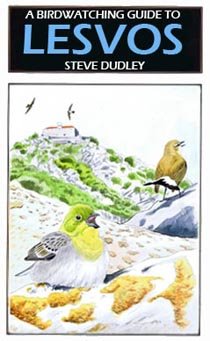
LESBOS, 15 - 29 April - so I didn't really mind!! Hey, lets face it.Twoo weeks in Lesbos, quite probably the best birding anywhere in the Med/southern Europe or two weeks at home (even if it means missing a PBC tick!). This was the third year in a row I have had the pleasure of leading birding holidays for Speyside Wildlife on this fantastic Greek Aegean island which lies just 5 miles off the coast of Turkey. Each of my six weeks on the island have been co-leading with Speyside Wildlife's only staff guide - Mark Newall. Mark is one ofthee sharpest birders I have ever birded with (it helps like if you get paid to be in the field so much I guess!), and apart from being a great birder, he's also ace fun to be with (hey, I'll get people talking about the two of us if I go on any more!).
Lesbos was crackin'. The first week was a little on the cool, wet and windy side, and the old shorts didn't get a look in. The weather tho played a great part in providing top 'vis mig' (visible migration).Thee rain kept things down and in between the showers birds seemed to pop out of every bush at times (and out of the grass, and overhead, and out of the water!). We had a good weeks birding with the group, but Mark and I failed to pick up even a Lesbos tick between us.
On the group change over day though, that all changed (at least for me!). We had about eight hours between dropping one group off at the airport and picking the next one up. We headed out to the Vetara peninsula and had a cracking day's birding. Arriving at the river bridge we walked straight on to two Citrine Wags (Lesbos tick for me, and the first of 9 we would find in the next week - out of a total of 12 seen on the island - not a bad find ration eh). Caspian Tern was also added to my Lesbos list,but I think the best was a single Purple Ronnie (Purp Heron) and a couple of Collared Prats seen flying in off the sea from the headland - great stuff!
The second week was Lesbos at its best. The weather improved and with it the pace of birding gradually picked up as the migrants poured through. Mark and I both managed not only a Lesbos, but a life tick, when the group found a Eastern Bonelli's Warbler at Ipsilou - bloody fantastic! Well chuffed. Not so the next big bird - Little Swift, which I found in a sky full of swifts, swallows and martins - there were bloody hundreds of birds and nothing to give directions from only sky! Unfortunately it belted straight through and this first for the island was seen only by myself.
By the end of the week the place was hoochin' with Temminck's Stints (over 20 seen on our last day in under an hour along the East River), Bee-eaters where everywhere, and numbers of Red-footed Falcons were on the up including a group of 16 by the Kalloni saltpans. Other memories will include the flock of 21 Purple Rons looking for somewhere to land, flocks of marsh terns and bags of shrikes - Lesser, Woodchat, Masked and Red-backed all on the same day - oh, and a Roller! Simply fab, and I've said before, gotta be the best birdin in the Western Pal!
So, what 'av I been up to in recent times?
BIRDING TRIP - LA CAMARGUE
Late February - Graham Catley and Kev du Rose completely gripped me off with emails and digiscope shots of Wallcreepers et al they had seen in early Feb in southern France. Bugger it I thought! So off a group of us went for a crackin' few days birding La Camargue and surrounding environs. Frickin Wallcreepers for brekky on two days, a mega count of 652 Little Bustards (eat ya chuffin heart out!), a pair of displaying Bonelli's Eagles (if ya gonna bother - ya may as well bother good!), Slender-billed Gull, White Stork, Black Kites, Rock Spadgers, Stone-curlews, huge numbers of harriers and buntings and loads of other shit. Bloody fantastic! The whole thing only set us back around £230 each via Ryanair to Montpellier, stayed at Etap hotel in Arles and a hire car.
BIRDING
There's been plenty of it for a change. A semi decent run of passage waders and other birds in the Peterborough area including Temminck's Stint (PBC tick no. 210) found on the Nene Washes (and a second bird seen at Welland Bank Pits on 13 May), a few Bar-tailed Godwits, Whinchat (including three on Farcet Fen) and up to 11 (yes 11!) Turtle Doves in the garden! Can't say I've ever heard of anyone getting anywhere near that sort of number in their garden before (lets face it - how many people get Turts at all in their garden!).
Tree Sparrows continue to reside with me, Chris Hughes (ringer at Ferry Meadows CP and Bainton GP) came along to stick some shiny rings (and red colour rings) on my birds. We caught 13 and we missed at least 9 other birds. Amazing as I had only seen a max of 9 birds in the preceding two weeks! I reckon that I have 4-6 pairs breeding in the immediate area and visiting the garden feeders constantly.
The weekend of the 8/9 May was the local GPOG Bird Race. As defending champs our team (comprising Brian Stone, Katie Fuller, Kev du Rose (replacing Mikey Weedon who was in Canada) and myself) had something to prove, having scooped the GPOG Bird Race Tankard last year with the best ratio to date - 111 species from a total of 118 seen. We didn't let ourselves down. On what turned out to be a hard working cool and damp day we tied first place with 111 species from a total of 119 seen on the day. For a full list of what we saw see Katie's list.
Other local goodies include Long-eared Owls, Spotted Flys, garden full of buntings and stuff, oh - and loads more! Trust me.
But the best bird of the spring was a Hoopoe found by my good mate Brian Stone. I unfortunately missed it cos I was out of the country in . . .
LESBOS, 15 - 29 April - so I didn't really mind!! Hey, lets face it.Twoo weeks in Lesbos, quite probably the best birding anywhere in the Med/southern Europe or two weeks at home (even if it means missing a PBC tick!). This was the third year in a row I have had the pleasure of leading birding holidays for Speyside Wildlife on this fantastic Greek Aegean island which lies just 5 miles off the coast of Turkey. Each of my six weeks on the island have been co-leading with Speyside Wildlife's only staff guide - Mark Newall. Mark is one ofthee sharpest birders I have ever birded with (it helps like if you get paid to be in the field so much I guess!), and apart from being a great birder, he's also ace fun to be with (hey, I'll get people talking about the two of us if I go on any more!).
Lesbos was crackin'. The first week was a little on the cool, wet and windy side, and the old shorts didn't get a look in. The weather tho played a great part in providing top 'vis mig' (visible migration).Thee rain kept things down and in between the showers birds seemed to pop out of every bush at times (and out of the grass, and overhead, and out of the water!). We had a good weeks birding with the group, but Mark and I failed to pick up even a Lesbos tick between us.
On the group change over day though, that all changed (at least for me!). We had about eight hours between dropping one group off at the airport and picking the next one up. We headed out to the Vetara peninsula and had a cracking day's birding. Arriving at the river bridge we walked straight on to two Citrine Wags (Lesbos tick for me, and the first of 9 we would find in the next week - out of a total of 12 seen on the island - not a bad find ration eh). Caspian Tern was also added to my Lesbos list,but I think the best was a single Purple Ronnie (Purp Heron) and a couple of Collared Prats seen flying in off the sea from the headland - great stuff!
The second week was Lesbos at its best. The weather improved and with it the pace of birding gradually picked up as the migrants poured through. Mark and I both managed not only a Lesbos, but a life tick, when the group found a Eastern Bonelli's Warbler at Ipsilou - bloody fantastic! Well chuffed. Not so the next big bird - Little Swift, which I found in a sky full of swifts, swallows and martins - there were bloody hundreds of birds and nothing to give directions from only sky! Unfortunately it belted straight through and this first for the island was seen only by myself.
By the end of the week the place was hoochin' with Temminck's Stints (over 20 seen on our last day in under an hour along the East River), Bee-eaters where everywhere, and numbers of Red-footed Falcons were on the up including a group of 16 by the Kalloni saltpans. Other memories will include the flock of 21 Purple Rons looking for somewhere to land, flocks of marsh terns and bags of shrikes - Lesser, Woodchat, Masked and Red-backed all on the same day - oh, and a Roller! Simply fab, and I've said before, gotta be the best birdin in the Western Pal!
Thursday, February 12, 2004
Another cracking day from the house, with a covey of seven Grey Partridge seen briefly from the back garden, soon followed by a female Merlin from the office window and the usual garden suspects - Treeps, Reed Bunts and Yammers. Fan-bleedin-tastic!
Sunday, February 8, 2004
I seem to have spent so little time out this year, so with recent reports of a couple or three Little Egberts knocking around the Milking Nook area near Newborough, I decided to take a wander up there with Katie Fuller.

We drove slowly along the droves checking all the dykes and soon came up behind another car driving too slowly to be normal. We exchanged pleasantries and negative gen with Tony Parker before resuming our search. We happened across a couple of decent flocks of feeding Fieldfares before heading up towards the River Welland by Borough Fen Decoy. Still nothing. We turned round and stopping along Decoy Road to watch a mixed flock of feeding Starlings and Fieldfares, and out of the corner of my eye I saw a movement - Little Egbert! It was gone - dropped in to a dyke right in front of us. Then two birds popped up again and landed in the adjacent field, both cowering in the strong wind. I maneuvered the car and managed by setting up the digiscope in the back seat I was well out of the wind and managed to get a couple of record shots shooting directly in to the sun! Oh um - you can't win 'em all.
Monday, February 2, 2004
I found myself out and about over lunchtime so decided to do a loop along Willow Hall Lane and area to check the fields for loafing gulls. There were none along WHL, in fact, the herd of Bewick's Swans which I think attracted them to these fields in the first place, had now moved on. I checked further along and found myself at Dogsthorpe Star Pit. There were plenty of gulls down on the pit, but several scans revealed nothing - although the viewing angle wasn't great with all the birds arse-end on and I was looking right in to the sun for about a third of the birds. Suddenly a loud bang as a bird scarer was set off on the adjacent tip the birds nearest to the tip rose. Right in the middle of the rising mass was a startling white bird - it was the first winter Iceland Gull found over the weekend on Prior's Fen by Kev Du Rose. Fantastic! The birds stared to land and followed the Ice to the ground. But no sooner had it hit the deck when a handful of crackers were let off on the tip and the bloody lot - about 3000 birds, rose and were soon gaining height and beginning to disperse! Damn.
Picking up the Ice again wasn't that difficult. It was so white, an advanced first winter bird, and it circled upwards and then began to drift off away from me with a large group of birds heading up towards Newborough. Lost to view I made the call to put the news out and jumped in the car to go and check the field up towards Newborough. When I got to them I was amazed that the 1000 or so birds that headed towards here had vanished. Another quick run round the Willow Hall Lane loop revealed the same out there - no gulls! Where had they all gone. With the birds from the tip, some 6-7000 gulls and quite a few hundred corvids had simply vanished!
Sunday, February 8, 2004
I seem to have spent so little time out this year, so with recent reports of a couple or three Little Egberts knocking around the Milking Nook area near Newborough, I decided to take a wander up there with Katie Fuller.
We drove slowly along the droves checking all the dykes and soon came up behind another car driving too slowly to be normal. We exchanged pleasantries and negative gen with Tony Parker before resuming our search. We happened across a couple of decent flocks of feeding Fieldfares before heading up towards the River Welland by Borough Fen Decoy. Still nothing. We turned round and stopping along Decoy Road to watch a mixed flock of feeding Starlings and Fieldfares, and out of the corner of my eye I saw a movement - Little Egbert! It was gone - dropped in to a dyke right in front of us. Then two birds popped up again and landed in the adjacent field, both cowering in the strong wind. I maneuvered the car and managed by setting up the digiscope in the back seat I was well out of the wind and managed to get a couple of record shots shooting directly in to the sun! Oh um - you can't win 'em all.
Monday, February 2, 2004
I found myself out and about over lunchtime so decided to do a loop along Willow Hall Lane and area to check the fields for loafing gulls. There were none along WHL, in fact, the herd of Bewick's Swans which I think attracted them to these fields in the first place, had now moved on. I checked further along and found myself at Dogsthorpe Star Pit. There were plenty of gulls down on the pit, but several scans revealed nothing - although the viewing angle wasn't great with all the birds arse-end on and I was looking right in to the sun for about a third of the birds. Suddenly a loud bang as a bird scarer was set off on the adjacent tip the birds nearest to the tip rose. Right in the middle of the rising mass was a startling white bird - it was the first winter Iceland Gull found over the weekend on Prior's Fen by Kev Du Rose. Fantastic! The birds stared to land and followed the Ice to the ground. But no sooner had it hit the deck when a handful of crackers were let off on the tip and the bloody lot - about 3000 birds, rose and were soon gaining height and beginning to disperse! Damn.
Picking up the Ice again wasn't that difficult. It was so white, an advanced first winter bird, and it circled upwards and then began to drift off away from me with a large group of birds heading up towards Newborough. Lost to view I made the call to put the news out and jumped in the car to go and check the field up towards Newborough. When I got to them I was amazed that the 1000 or so birds that headed towards here had vanished. Another quick run round the Willow Hall Lane loop revealed the same out there - no gulls! Where had they all gone. With the birds from the tip, some 6-7000 gulls and quite a few hundred corvids had simply vanished!
Thursday, January 29, 2004
Wow! Its nigh on three weeks since I updated this diary. You know what they say - 'too much work makes Toadsnatcher a dull boy'. I've done damn little birding in the last few weeks cos of work and weather, and latterly, DIY! Bleedin 'ell! Well, after a year in my Fenland pad, I could stand the dreary bathroom no longer so its been largely gutted and being redone. Thankfully, my wee brother Spidd is here to help for the week while I crack on with BOU work and planning for next weeks GM Birds conference I am running in London.
The last two days of 'real' weather seems to have brought the usual chaos and bringing parts of the country to a halt, and it has had a marked influence on the garden and surrounding fen. Yesterday, with the arrival of a few inches of snow, I saw over 6400 Woodpigeons on the fen - a slight increase on the usual 400+! And Skylarks, two flocks totaling 26 birds instead of the odd singleton. In the garden Reed Buntings and Yellowhammers have come in and I've still go a couple of Treeps.
With the weekend approaching I need to get out at least for a few hours to clear the old head!
The last two days of 'real' weather seems to have brought the usual chaos and bringing parts of the country to a halt, and it has had a marked influence on the garden and surrounding fen. Yesterday, with the arrival of a few inches of snow, I saw over 6400 Woodpigeons on the fen - a slight increase on the usual 400+! And Skylarks, two flocks totaling 26 birds instead of the odd singleton. In the garden Reed Buntings and Yellowhammers have come in and I've still go a couple of Treeps.
With the weekend approaching I need to get out at least for a few hours to clear the old head!
Tuesday, January 06, 2004
A bleak and wet morning has given way to a very sunny but windy afternoon. Nipping in to the back garden to top up the feeders I hear a Skylark calling. I look up to see it being pursued by a female Merlin. Fab! A chase ensues and the Merlin doesn't seem to have too much difficulty in simply plucking the Skylark from the air during a fantastic jink! Bloody marvelous! As ever, a prolonged spell in the garden such as topping up the feeders, means I have a trusty pair of Leica's dangling around my neck so I'm always ready to enjoy things to the max! (wasn't that a Pepsi ad?).
Monday, January 05, 2004
A report of 12 Waxwings in a Peterborough retail park car park sorted my lunch hour out! At 1.30pm I joined an growing number of local birders and members of the public undertaking the annual ritual of staring at lumps in bare trees! The light was appalling but I did manage a few snaps. Some pretty groovy crests in among this lot!

Last seen in the garden on 26 November, today two Tree Sparrows have returned and are happily filling themselves with Vine House Farm Premium High Energy seed from the feeders.
The date is only three days short of the 8 Jan anniversary when the I first saw Treeps here. Based on their extremely nervous nature when they arrived last January (it took them several weeks before they appeared comfortable on the feeders and even longer before they fed on the ground) I judged that they were completely new to the site. Seeing the two birds this morning seemingly backs this up. They are obviously returning birds feeding confidently and aggressively alongside House Sparrows and Greenfinches.
Last seen in the garden on 26 November, today two Tree Sparrows have returned and are happily filling themselves with Vine House Farm Premium High Energy seed from the feeders.
The date is only three days short of the 8 Jan anniversary when the I first saw Treeps here. Based on their extremely nervous nature when they arrived last January (it took them several weeks before they appeared comfortable on the feeders and even longer before they fed on the ground) I judged that they were completely new to the site. Seeing the two birds this morning seemingly backs this up. They are obviously returning birds feeding confidently and aggressively alongside House Sparrows and Greenfinches.
Sunday, January 04, 2004
Days away from the Peterborough area seem to be as rare as birds' teeth. My days of chasing rarities around the country aren't quite altogether gone, just usually confined to lifers.
The recent Yankee Robin (Cornwall) and Baltimore Oriole (Oxford) were very tempting, but I didn't succumb. Another Yankee Robin less than two hours away in Grimsby tho soon sent my pulse racing and I could feel a spot of dirty twitching coming on!
Having ignored the robin yesterday in favour of some more top Peterborough birding (but it didn't come close to 2 Jan), Katie Fuller and I decide to head up the A15 when news was confirmed this morning. By late morning we had joined a decent gathering on day three of the Grimsby Yankee Robin's (known) stay (it may well have come in much earlier but was only 'found' on Friday).

The bird gave cracking views as it fed on berry-laden bushes or on the ground on apples and worms. It seemed very aggressive at times to the Blackbirds using the same patch. This first-winter female made it a species pair for me, having already seen a first-winter male on St Agnes, Isles of Scilly in 1998.
Katie and I spent over an hour enjoying the robin and chatting to friends from far and wide (well I was anyway!) before we headed round the corner to watch one of those must-see birds - Waxwing. Few species have the Waxwing's charisma and this bird didn't disappoint, performing brilliantly and doing its 'Don King' impersonation. Crackin!
After a few frame-filling snaps, we headed west to Far Ings where we had a great couple of hours seeking out a Red-necked Grebe and tripping across all sorts of goodies along the way - Smew, Water Rail, Scaup and Willow Tit.
I'd forgotten how good these 'away days' can be, and I might just have to think about some more dirty twitching in the near future.
The recent Yankee Robin (Cornwall) and Baltimore Oriole (Oxford) were very tempting, but I didn't succumb. Another Yankee Robin less than two hours away in Grimsby tho soon sent my pulse racing and I could feel a spot of dirty twitching coming on!
Having ignored the robin yesterday in favour of some more top Peterborough birding (but it didn't come close to 2 Jan), Katie Fuller and I decide to head up the A15 when news was confirmed this morning. By late morning we had joined a decent gathering on day three of the Grimsby Yankee Robin's (known) stay (it may well have come in much earlier but was only 'found' on Friday).
The bird gave cracking views as it fed on berry-laden bushes or on the ground on apples and worms. It seemed very aggressive at times to the Blackbirds using the same patch. This first-winter female made it a species pair for me, having already seen a first-winter male on St Agnes, Isles of Scilly in 1998.
Katie and I spent over an hour enjoying the robin and chatting to friends from far and wide (well I was anyway!) before we headed round the corner to watch one of those must-see birds - Waxwing. Few species have the Waxwing's charisma and this bird didn't disappoint, performing brilliantly and doing its 'Don King' impersonation. Crackin!
After a few frame-filling snaps, we headed west to Far Ings where we had a great couple of hours seeking out a Red-necked Grebe and tripping across all sorts of goodies along the way - Smew, Water Rail, Scaup and Willow Tit.
I'd forgotten how good these 'away days' can be, and I might just have to think about some more dirty twitching in the near future.
Friday, January 02, 2004

After a somewhat grim end to the year (very little birding and what there was wasn't very profitable), it was nice to belatedly kick off 2004 with a storming day's birding in the Peterborough area.
News of three Waxwings at Crown Lakes CP in Farcet (just three miles from the house) on 1 Jan was not to be missed, so arriving with Katie Fuller just after 9am we were greeted by Mike 'earlybird' Weedon who was just leaving the site empty-handed.
We stopped to chat at the start of one of the footpaths. I commented that Mike had been out far too early and birds had only really started stirring in the last half hour. At that precise moment, Mike spotted a lone bird on a nearby wire and commented "look, at least there's a Starling here now we can string".
Lifting his bins, he was greeted by a Waxwing! Wow! Scopes were soon trained on it and stonking views were soon enjoyed in the brightening light. We watched the 'Wacko' for about 45 mins before it started to get a bit more elusive in the thick scrub. I managed a few snaps between being disturbed by dog walkers.
We departed and headed for Eldernell to check the pit to see if the Shag Mike had seen there last night was present. No joy, but a look over the RSPB reserve was fantastic - hundreds of duck including Wigeon, Pintail and Gadwall, loads of Lapwing and Golden Plover, plus lesser numbers of Ruff and Redshank, and, err, two Black Swans.
A quick check of the River Nene at The Dog for the Shag (nothing) and on to Stanground Wash. The Dartford Warbler found by Brian Stone on 10 Dec was last reported on 17th, so it was a long walk out to the wash for what was a pretty slim chance of any further sign of it. Fieldfares, Redwings and Grey Wags brightened up the half-hour walk to the wash.
Katie and I were soon on to three Stonechats. The Dabbler had been sticking pretty close to them in December so we concentrated our efforts in this area. Within 15 minutes of constant panning I simply happened across the Watford Dabbler sat up on top of some vegetation! Fantastic. Katie was soon onto it, but it soon flew into vegetation and was again lost.
Another half hour of so of searching and the Dabbler appeared below a female Stonechat. It spent a couple of mins shadowing the Stonechat before being lost again. No photo opportunities but my best views of this cracking little bird.
From here we headed out to Eye Tip to search for the Hooded Crow that we last saw on 24 Dec. Arriving at our viewing area at Tanholt GP I heard a loud crack from my tripod as the leg I was holding to carry it over my shoulder broke from its mount. Great! Katie set up her scope and after a while I had managed to fix the leg temporarily back in to place. Phew!
I immediately started scoping the tip and fields for the Hoodie, searching through the rafts of gulls and surprising few corvids. Just panning past the main tip area I glimpsed a Glaucous Gull's wingtips dropping down behind the tip bank. Fantastic! And Damn! at the same time! We switched our efforts to the gull and within a few minutes I was soon shouting to Katie that it was flying right along the tip and . . . behind some soddin trees! It didn't come out the other end so it had clearly dropped back in to the tip.
We stayed put, searching through the gulls each time they rose over the next hour and a half, but apart from one other very brief glimpse, I wasn't able to get Katie on to it. Not good! We did however pick up the Hooded Crow during the searching, but it remained distant and our of range of the camera. A couple of Whooper Swans also flew over, calling their almost mournful 'whoops' as they went.
Leaving the site with numb toes and fingers as we drove back to mine in fading light, I had a rare brainwave! Diverting along North Bank we pulled up at Dog-in-a-Doublet to look for the Shag (presuming that Mike's bird at Eldernell Pit yesterday was the same bird found at The Dog by Jonny Taylor in mid-December). Binning the river and bank - nothing. Looking left towards the sluice I then saw a bird flying low over the river coming straight towards us. 'It's the Shag!' I yelled! Great stuff.
So we returned for a hot drink and some snap pretty chuffed with our day, even if Katie had missed the Glauc (sorry KAF!).
Wednesday, 31 December 2003
The year ended with my last PBC year tick being the Shag found by Jonny Taylor on 18 Dec and bringing me up to 185, three better than my PBC record total set last year. Wot for 2004?
Monday, December 22, 2003
Having been away yesterday, I was well miffed to miss another of the areas elusives - Red-breasted Merganser - found by Will Bowell on the River Welland north of Crowland.
An extensive search of the river from Welland Bank Pits eastwards drew a blank on the RB merg but enjoyable (if not frustrating!) birding with Hen Harrier, Stonechats, Whooper Swans, Red-crested Pochard and Pintail all seen.
On the way back home I decided to check out Star Pit. It was largely frozen, but amazingly accompanying the Redshank and Snipe was a rather scruffy and sorry looking Grey Plover - PBC year tick no. 185!
Thurs, 18 Dec 2003
Shag - that major PBC elusive - is bagged at last!
An extensive search of the river from Welland Bank Pits eastwards drew a blank on the RB merg but enjoyable (if not frustrating!) birding with Hen Harrier, Stonechats, Whooper Swans, Red-crested Pochard and Pintail all seen.
On the way back home I decided to check out Star Pit. It was largely frozen, but amazingly accompanying the Redshank and Snipe was a rather scruffy and sorry looking Grey Plover - PBC year tick no. 185!
Thurs, 18 Dec 2003
Shag - that major PBC elusive - is bagged at last!
Wednesday, December 10, 2003
Brian Stone does it again! Dartford Warbler! Not only a PBC first, but a Hunts first! Well done matey!
Although originally found on the southern riverside edge of the River Nene at Padholme Pumping Station, by the time I and the masses (well 10 people!) had amassed, the bird had flown across the river and had been lost.
A brief glimpse of the bird in flight by myself (UTVs) was followed by another wait when Brian thought he saw it distantly near a couple of Stonechats. We all watched the Stonechats. I followed a movement to the left and eventually it materialised. Bingo! I was watching a Watford Dabbler!
The bird was very active and mobile, moving around Stanground Wash with Stonechats and was always distant. I chanced my arm with the camera when it sat up and was visible against the pale grass background. Amazingly, given the tiny size of the bird and the distance involved, I got this record shot!
Brian stayed on until dark and managed a couple of better shots.
But the day had a sting in the tail for our Bri. Leaving the area in the dark, a wet road and muddy tyres saw him slip off into a roadside field with one helluva result! Thankfully for all of us who depend on him for finding some birds to look at, he escaped unharmed but I've yet to hear how long he had to freeze his hoodjajips off waiting for the cavalry to arrive.
Amazingly, as I was leaving Padholme Pumping Station, I found the second warbler of the day here - a Sedge Warbler, feeding along the counter drain on the Flag Fen side of the river bank. This was just a bit easier to snap!
Although originally found on the southern riverside edge of the River Nene at Padholme Pumping Station, by the time I and the masses (well 10 people!) had amassed, the bird had flown across the river and had been lost.
A brief glimpse of the bird in flight by myself (UTVs) was followed by another wait when Brian thought he saw it distantly near a couple of Stonechats. We all watched the Stonechats. I followed a movement to the left and eventually it materialised. Bingo! I was watching a Watford Dabbler!
The bird was very active and mobile, moving around Stanground Wash with Stonechats and was always distant. I chanced my arm with the camera when it sat up and was visible against the pale grass background. Amazingly, given the tiny size of the bird and the distance involved, I got this record shot!
Brian stayed on until dark and managed a couple of better shots.
But the day had a sting in the tail for our Bri. Leaving the area in the dark, a wet road and muddy tyres saw him slip off into a roadside field with one helluva result! Thankfully for all of us who depend on him for finding some birds to look at, he escaped unharmed but I've yet to hear how long he had to freeze his hoodjajips off waiting for the cavalry to arrive.
Amazingly, as I was leaving Padholme Pumping Station, I found the second warbler of the day here - a Sedge Warbler, feeding along the counter drain on the Flag Fen side of the river bank. This was just a bit easier to snap!
Tuesday, December 09, 2003
A call from Brian Stone drags me away form my computer for an hour or so, when he tells me county recorder John Oates has found a Siberian Chiffchaff at Tanholt Gravel Pits. I get straight out but on arrival the bird hasn't been seen for about 45 mins. An hour or so searching and still nothing. Even all the gulls and crows have been scared away by bird scarers, so we are left to enjoy a few Long-tailed Tits and Goldcrests.
Mon, 8 December 2003
A brilliant sunny day and I thought I would try for some better shots of the Hooded Crow that's been seen at Eye Tip from Tanholt Gravel Pits. Whilst failing to find the Hoodie, Brian Stone calls me to say he has a Greenland White-fronted Goose on Orton Brick Pit. With only one accepted county record prior to this year, this was the second PBC area record this year following my own find of a family party of four at Prior's Fen in January.
I about turned and headed straight for OBP, but while on the way Brian rings to say it has flown off towards Hampton with other geese. I head straight for the unlikely setting of Hampton Lakes, and after sifting through all the plastics (Bar-headed Goose, Barnacle Goose) and a Pink-footed Goose, I latch on to the Greenland White-front. And what a cracker! Brian's has joined me by now and we both get out our cameras and beginning clicking to record what may well up as only the third county record.
Mon, 8 December 2003
A brilliant sunny day and I thought I would try for some better shots of the Hooded Crow that's been seen at Eye Tip from Tanholt Gravel Pits. Whilst failing to find the Hoodie, Brian Stone calls me to say he has a Greenland White-fronted Goose on Orton Brick Pit. With only one accepted county record prior to this year, this was the second PBC area record this year following my own find of a family party of four at Prior's Fen in January.
I about turned and headed straight for OBP, but while on the way Brian rings to say it has flown off towards Hampton with other geese. I head straight for the unlikely setting of Hampton Lakes, and after sifting through all the plastics (Bar-headed Goose, Barnacle Goose) and a Pink-footed Goose, I latch on to the Greenland White-front. And what a cracker! Brian's has joined me by now and we both get out our cameras and beginning clicking to record what may well up as only the third county record.
Friday, December 05, 2003
In this day of e-mail and constant staring at a computer screen, I'm beginning to see the attraction of using the good old-fashioned telephone.
This afternoon whilst talking to a colleague on the phone, my gaze was, as usual when on the phone, fixed to the garden following every movement, bins at the ready. It was 4.10pm and few birds were left in the garden, most having departed for their roosts. A small group of Starlings were wheeling around over their leylandii roost site when suddenly a streak burst into the sky from the left. "Merlin!" I found myself shrieking down the phone to my colleague. "Wow! It's chasing a Mipit" I added.
The Mipit headed upwards, circling in a slow jinking flight. The Merlin followed every turn, spiraling skywards, almost faltering at one point, with tail fully fanned, when the Mipit suddenly broke away. The Merlin seemed caught out, but suddenly hit turbo and shot off like a bullet. One of those few-second moments which seem to last a lifetime! It was fantastic, and unfortunately, not wanting to drop the phone on my colleague, I didn't get to see the rest of the chase and the outcome.
My colleague was thoroughly gripped but complimented me on my live commentary!
Merlin is increasingly regular on the fen now and I almost expect to see it most weeks, and more often than not from the office window (I think the sixth sighting from my desk).
With Peregrine added to my house list recently while on the phone to local recorder Brian Stone, and a few other species added that way (Moorhen immediately springs to mind), I think I might make more use of my newly-discovered birding aid!
This afternoon whilst talking to a colleague on the phone, my gaze was, as usual when on the phone, fixed to the garden following every movement, bins at the ready. It was 4.10pm and few birds were left in the garden, most having departed for their roosts. A small group of Starlings were wheeling around over their leylandii roost site when suddenly a streak burst into the sky from the left. "Merlin!" I found myself shrieking down the phone to my colleague. "Wow! It's chasing a Mipit" I added.
The Mipit headed upwards, circling in a slow jinking flight. The Merlin followed every turn, spiraling skywards, almost faltering at one point, with tail fully fanned, when the Mipit suddenly broke away. The Merlin seemed caught out, but suddenly hit turbo and shot off like a bullet. One of those few-second moments which seem to last a lifetime! It was fantastic, and unfortunately, not wanting to drop the phone on my colleague, I didn't get to see the rest of the chase and the outcome.
My colleague was thoroughly gripped but complimented me on my live commentary!
Merlin is increasingly regular on the fen now and I almost expect to see it most weeks, and more often than not from the office window (I think the sixth sighting from my desk).
With Peregrine added to my house list recently while on the phone to local recorder Brian Stone, and a few other species added that way (Moorhen immediately springs to mind), I think I might make more use of my newly-discovered birding aid!
Tuesday, December 02, 2003
Having had a day of dipping on Sunday (Hooded Crow, White-fronted Goose, Smew and Jack Snipe) I was thrilled when Brian Stone rang to tell me that he had refound the Hooded Crow at Eye Tip. Seconds later I was in the car and within 15 minutes I was watching my 206th PBC area species. Fan-bloody-tastic! The briefest, distant views gave way to a long wait before it eventually came in to the field in front of me and started feeding among the loafing gulls. I rattled off a handful of record shots, which despite the gloom and distance came out reasonably well.
Monday, November 24, 2003
It's been a busy week with virtually no time for birding, and BOU work dominating my time. What free moments I've found have been put paid to with the weather being foul!
Today found me along Ham Lane at Ferry Meadows CP, watching a very late Lesser Whitethroat. Such late birds have to be checked carefully just in case they turn out to be one of the eastern forms, several of which have been seen in Britain in recent weeks. An hour's watching and digiscoping revealed it to be more than a bog-standard curruca - see here. Four Lesser Redpolls were also welcome.

What is presumably the same Great Spotted Woodpecker from autumn is back on the nut feeder (now in adult male plumage).
Friday, 21 November 2003:
A chance sighting of a female Lesser Spotted Woodpecker seen in flight whilst driving along the drove at Blackpool Hill was a cracking find and an unexpected fen tick. If it's got the inclination, it might find my feeders, 1.5 miles to the south!
Weds, 19 November 2003:
Star bird of last week, though, was undoubtedly the imm male Peregrine first seen soaring over the house whilst on the phone to Brian Stone (sorry Bri!). Ironically, this was the 92nd garden tick for me in just under a year, and equals Brian's total, and taking me to joint second in the PBC garden stakes (Hamletts beware!). I saw the Peg twice more that afternoon, plus a female Merlin in pursuit of a rocket-propelled Meadow Pipit.
Today found me along Ham Lane at Ferry Meadows CP, watching a very late Lesser Whitethroat. Such late birds have to be checked carefully just in case they turn out to be one of the eastern forms, several of which have been seen in Britain in recent weeks. An hour's watching and digiscoping revealed it to be more than a bog-standard curruca - see here. Four Lesser Redpolls were also welcome.
What is presumably the same Great Spotted Woodpecker from autumn is back on the nut feeder (now in adult male plumage).
Friday, 21 November 2003:
A chance sighting of a female Lesser Spotted Woodpecker seen in flight whilst driving along the drove at Blackpool Hill was a cracking find and an unexpected fen tick. If it's got the inclination, it might find my feeders, 1.5 miles to the south!
Weds, 19 November 2003:
Star bird of last week, though, was undoubtedly the imm male Peregrine first seen soaring over the house whilst on the phone to Brian Stone (sorry Bri!). Ironically, this was the 92nd garden tick for me in just under a year, and equals Brian's total, and taking me to joint second in the PBC garden stakes (Hamletts beware!). I saw the Peg twice more that afternoon, plus a female Merlin in pursuit of a rocket-propelled Meadow Pipit.
Tuesday, November 11, 2003
Having notched up number 90 for the garden list on Sunday, I really didn't think that no. 91 was only a couple of days away. Chomping on my muesli I nearly choked when I saw the distinct black cap of a Blackcap in the rose bush in the front garden! Fan-bloody-tastic!
A damn murky day otherwise and a walk on the fen before work was pretty quiet.
The day was spent slaving over BOU Council preparation and going through the drafts of the my latest bino survey for Bird Watching magazine (Dec issue) - posh bins - the best of the best of the best (and all that).
A damn murky day otherwise and a walk on the fen before work was pretty quiet.
The day was spent slaving over BOU Council preparation and going through the drafts of the my latest bino survey for Bird Watching magazine (Dec issue) - posh bins - the best of the best of the best (and all that).
Sunday, November 09, 2003
Readying myself to leave to watch my kid brother Martyn play footie for Netherton Kestrels, through the kitchen window the shape of four swans were visible in the back fields. Having never seen a Mute Swan in the fields here (only ever seen fly-overs), I grabbed my 10+15x Duovids and cranking them up to 15x was gazing at my 90th garden tick - four Whooper Swans!

Bloody fantastic. When I moved into the cottage in November 2002, I set myself the ambitious target of seeing 90 species in or from the garden in my first year. With the first anniversary around the corner, I was beginning to think that I was going to find myself one short! But no, the Whoopers make it 90, and my next goal is to see just how long it takes me to get to 100 species which obvsiously now within reach as I have seen 15 species within a mile or so of the house which must all be contenders for the garden.
Back from watching Martyn and his team get beat 4-0, I spent the day watching Premiership footie and working on the website. The garden was relatively busy with Tree Sparrows, Sparrowhawk and Yellowhammers all present again. Just along the drove from the house I again saw the Buzzard which appears to be using the copse by Bedford's Barn Farm as its roost and cover site.
Between the L'pool/Man U and Chelsea/Newcastle games, I spent an hour wandering around the fen. Birds had either already headed off to roost or were heading that way. Streams of gulls were heading over towards their Fletton BP roost, and the Starlings were swirling around. I put up four Grey Partridge and a couple of Snipe from one field, but the highlight(!) was only my third fen record of Canada Goose! Yep - with only one sight and one heard (in fog the other night) record, the 75 I had heading NE over the fen towards the Nene corridor was only the third record in nearly 12 months.
Back at the house I decided to look at the Great Fen Project website, and boy! When finished, its NE section will incorporate part of the old Whittlesey Mere site which lies adjacent to Farcet Fen! I can walk over to the old Whittlesey Mere fen from the house (and frequently do) so when the Great Fen Project is finished, I hope to be able to cycle from the house all the way to Woodwalton Fen without the need to go along any roads! Brilliant.
Sat, 8 November 2003
With Brian Stone finding Black Redstart and Brambling at the Millennium Bridge at Northey, I decided to spend the morning birding this much neglected area. I chose to follow the Green Wheel Cycle Route from the bridge and east between Wash Northey and the King's Dyke brick works. Nothing outstanding but loads of birds - Fieldfares, Goldfinches, Meadow Pipits, tit flocks, Bullfinch - plenty of birds to look and sift through looking for that elusive scarcity.
Thr afternoon was spent witnessing my first POSH home win of the season as we put two goals past non-league Hereford in the FA Cup.
Bloody fantastic. When I moved into the cottage in November 2002, I set myself the ambitious target of seeing 90 species in or from the garden in my first year. With the first anniversary around the corner, I was beginning to think that I was going to find myself one short! But no, the Whoopers make it 90, and my next goal is to see just how long it takes me to get to 100 species which obvsiously now within reach as I have seen 15 species within a mile or so of the house which must all be contenders for the garden.
Back from watching Martyn and his team get beat 4-0, I spent the day watching Premiership footie and working on the website. The garden was relatively busy with Tree Sparrows, Sparrowhawk and Yellowhammers all present again. Just along the drove from the house I again saw the Buzzard which appears to be using the copse by Bedford's Barn Farm as its roost and cover site.
Between the L'pool/Man U and Chelsea/Newcastle games, I spent an hour wandering around the fen. Birds had either already headed off to roost or were heading that way. Streams of gulls were heading over towards their Fletton BP roost, and the Starlings were swirling around. I put up four Grey Partridge and a couple of Snipe from one field, but the highlight(!) was only my third fen record of Canada Goose! Yep - with only one sight and one heard (in fog the other night) record, the 75 I had heading NE over the fen towards the Nene corridor was only the third record in nearly 12 months.
Back at the house I decided to look at the Great Fen Project website, and boy! When finished, its NE section will incorporate part of the old Whittlesey Mere site which lies adjacent to Farcet Fen! I can walk over to the old Whittlesey Mere fen from the house (and frequently do) so when the Great Fen Project is finished, I hope to be able to cycle from the house all the way to Woodwalton Fen without the need to go along any roads! Brilliant.
Sat, 8 November 2003
With Brian Stone finding Black Redstart and Brambling at the Millennium Bridge at Northey, I decided to spend the morning birding this much neglected area. I chose to follow the Green Wheel Cycle Route from the bridge and east between Wash Northey and the King's Dyke brick works. Nothing outstanding but loads of birds - Fieldfares, Goldfinches, Meadow Pipits, tit flocks, Bullfinch - plenty of birds to look and sift through looking for that elusive scarcity.
Thr afternoon was spent witnessing my first POSH home win of the season as we put two goals past non-league Hereford in the FA Cup.
Thursday, November 06, 2003
It's been a fairly quiet few days with little birding opportunity due to work. Even the garden was proving quiet, apart from the usual Sparrowhawk raids on the feeding station.
Today, tho, saw a cracking return to form. I hadn't seen a Tree Sparrow since 25 Oct, but this morning six Treeps returned to the garden and were very active on the feeders and at the sombrero. Since they first moved in in early January, this was the first period I had been Treep-free.
Next up was the blur of a female Merlin shooting past the office window mid-morning. Fantastic!
I had declined a lunchtime birding session with local recorder Brian Stone to concentrate on the Lowland Farmland Bird conference I am running for the BOU. It was nearly to my loss, for at 1.55pm Bri rang to tell me he had found a Black Redstart and a male Brambling at the Millennium Bridge, Northey, at the western end of North Bank east of Peterborough.
Black Red is a good local find and when he said it was photo-ready I deserted my desk in favour of what turned out to be a spanking little bird.
I arrived with no immediate sign, but then it appeared on the corral just where Bri said it was feeding, and I watched it for 30 or so mins as it fed actively from the fence posts and gates of the corral. Fantastic. And a really photogenic little bugger!

A quick shufty along the track where Bri had seen the Brambling with other finches revealed jack-squat - no finches at all. The hedgerow on the other side of the field tho was chocker with Fieldfares, about 220 at least, making a right racket.
Today, tho, saw a cracking return to form. I hadn't seen a Tree Sparrow since 25 Oct, but this morning six Treeps returned to the garden and were very active on the feeders and at the sombrero. Since they first moved in in early January, this was the first period I had been Treep-free.
Next up was the blur of a female Merlin shooting past the office window mid-morning. Fantastic!
I had declined a lunchtime birding session with local recorder Brian Stone to concentrate on the Lowland Farmland Bird conference I am running for the BOU. It was nearly to my loss, for at 1.55pm Bri rang to tell me he had found a Black Redstart and a male Brambling at the Millennium Bridge, Northey, at the western end of North Bank east of Peterborough.
Black Red is a good local find and when he said it was photo-ready I deserted my desk in favour of what turned out to be a spanking little bird.
I arrived with no immediate sign, but then it appeared on the corral just where Bri said it was feeding, and I watched it for 30 or so mins as it fed actively from the fence posts and gates of the corral. Fantastic. And a really photogenic little bugger!
A quick shufty along the track where Bri had seen the Brambling with other finches revealed jack-squat - no finches at all. The hedgerow on the other side of the field tho was chocker with Fieldfares, about 220 at least, making a right racket.
Thursday, October 30, 2003
I'd spent the last couple of days away and was knee-deep in e-mails and work today with little time for even a peek outside until the quiet of the fen was suddenly broken by thunderous noise of two Army Puma helicopters! The first came right over the house, by the sounds of it skimming the roof! I leapt up and out the back to see what the noise was (grabbing my bins on the way of course!). Outside I saw a Puma chopper skimming the field behind the house when a second came over the house in pursuit of the first. Wow! War games on Farcet Fen!
Looking back at the first, it was flushing everything from the ground in its path. Skylarks, Meadow Pipits, Yellowhammers, Corn and Reed Buntings all came leaping up from their ground feeding sites. A large bird then rose. An owl! I was on to it immediately and switching my Duovids to 12x was staring at a Short-eared Owl. Fantastic. Garden tick no.88. It rose quickly on deep wingbeats, then turned and flew straight towards me still gaining height. It was taking the reverse route that the two choppers had just taken, which lead it right over the house. Fabulous! As it came up to the garden and overhead, I could see its yellow eyes still on 12x. Wow!
The choppers sped off towards the nearby irrigation reservoir, scattering a handful of Fieldfares from the nearby elms. I had just lost the owl from view as it too headed towards the res, so I started checking all the birds in the air. Lapwings, Stock Doves, Woodpigs, then a duck. A female Goldeneye. Great. Not even a garden year tick, but only the second record. It had obviously been put up from the res. Then coming out of the background of whirring shopper blades, the clear 'tchuu' calls of a Redshank - garden tick no.89! Fan-bloody-tastic! Nowhere near as enjoyable as the SEO, but nonetheless, still a welcome addition to the garden list. The Redshank was followed by two Snipe and all three birds zoomed around over the fen before departing to the south-west and out of site.
Distracted from my work, and it being lunchtime, I decided to have a quick walk out to the raised reservoir to scan the fen from their for other birds. The SEO was put up again by the choppers and settled not far from me in a clump of fat hen trying to hide from the great armoured sky-monsters. More pipits and Skylarks were being put up and hordes of Woodpigs, but nothing else of note. I returned back to my desk (via the kitchen for a sarnie and a coffee) well chuffed with the two additions!
Short-eared Owl and Redshank take me to 89 species seen in the garden or from the house and garden since I moved in on 30 November last year. Only two gardens in the PBC area have recorded over 90 species - the Stone's garden in Elton (92) and the Hamlett's Longthorpe garden (93) - and both watched for well over the 11 months I've had! With some relatively easy species still missing, 100 species should be well within reach.
28-29 October 2003
A couple of days in Germany and very little to bright up the monotony of the meeting room. The meeting room did, however, have a floor-to-ceiling window overlooking the nearby river valley and Common Buzzards and Red Kites being mobbed by various corvids were welcome distractions at times!
Looking back at the first, it was flushing everything from the ground in its path. Skylarks, Meadow Pipits, Yellowhammers, Corn and Reed Buntings all came leaping up from their ground feeding sites. A large bird then rose. An owl! I was on to it immediately and switching my Duovids to 12x was staring at a Short-eared Owl. Fantastic. Garden tick no.88. It rose quickly on deep wingbeats, then turned and flew straight towards me still gaining height. It was taking the reverse route that the two choppers had just taken, which lead it right over the house. Fabulous! As it came up to the garden and overhead, I could see its yellow eyes still on 12x. Wow!
The choppers sped off towards the nearby irrigation reservoir, scattering a handful of Fieldfares from the nearby elms. I had just lost the owl from view as it too headed towards the res, so I started checking all the birds in the air. Lapwings, Stock Doves, Woodpigs, then a duck. A female Goldeneye. Great. Not even a garden year tick, but only the second record. It had obviously been put up from the res. Then coming out of the background of whirring shopper blades, the clear 'tchuu' calls of a Redshank - garden tick no.89! Fan-bloody-tastic! Nowhere near as enjoyable as the SEO, but nonetheless, still a welcome addition to the garden list. The Redshank was followed by two Snipe and all three birds zoomed around over the fen before departing to the south-west and out of site.
Distracted from my work, and it being lunchtime, I decided to have a quick walk out to the raised reservoir to scan the fen from their for other birds. The SEO was put up again by the choppers and settled not far from me in a clump of fat hen trying to hide from the great armoured sky-monsters. More pipits and Skylarks were being put up and hordes of Woodpigs, but nothing else of note. I returned back to my desk (via the kitchen for a sarnie and a coffee) well chuffed with the two additions!
Short-eared Owl and Redshank take me to 89 species seen in the garden or from the house and garden since I moved in on 30 November last year. Only two gardens in the PBC area have recorded over 90 species - the Stone's garden in Elton (92) and the Hamlett's Longthorpe garden (93) - and both watched for well over the 11 months I've had! With some relatively easy species still missing, 100 species should be well within reach.
28-29 October 2003
A couple of days in Germany and very little to bright up the monotony of the meeting room. The meeting room did, however, have a floor-to-ceiling window overlooking the nearby river valley and Common Buzzards and Red Kites being mobbed by various corvids were welcome distractions at times!
Sunday, October 26, 2003
A lazy morning! A slow breakfast and beginning to regret watching the England vs Samoa Rugby World Cup game when a text from ace bird finder Kevin Durose broke the boredom. 'Green-winged Teal at Star pit'. Do me! I missed it (as I presume it's the same returning bird we had in the area since 2000) when it was on the Nene Washes in Feb.
Arriving at Dogsthorpe Star Pit NR it didn't take me long to locate the bird - not quite fully out of eclipse, but a jam-spangler all the same. Although distant, I rattled off a few photos at least to get a record shot. My only distress about the GWT is that I gave this pit a good grilling yesterday and either it wasn't here or I overlooked it.

GWT sorted, I headed back to Tanholt GP, scene of yesterday's Firecrest but no joy. Bird action was down all round with fewer crests and tits hopping about and definitely fewer thrushes, although 35 Fieldfares dropped on to the berry-laden bushes. A first-winter Med Gull flew over heading for the landfill and a Whooper Swan 'whooped' across the sky to the east.
Last stop of the day was to Crown Lakes CP to check out a report from yesterday of a Black-necked or Slavonian Grebe. No sign and very little about, probably due to the illegal motorbikers that were around.
Arriving at Dogsthorpe Star Pit NR it didn't take me long to locate the bird - not quite fully out of eclipse, but a jam-spangler all the same. Although distant, I rattled off a few photos at least to get a record shot. My only distress about the GWT is that I gave this pit a good grilling yesterday and either it wasn't here or I overlooked it.
GWT sorted, I headed back to Tanholt GP, scene of yesterday's Firecrest but no joy. Bird action was down all round with fewer crests and tits hopping about and definitely fewer thrushes, although 35 Fieldfares dropped on to the berry-laden bushes. A first-winter Med Gull flew over heading for the landfill and a Whooper Swan 'whooped' across the sky to the east.
Last stop of the day was to Crown Lakes CP to check out a report from yesterday of a Black-necked or Slavonian Grebe. No sign and very little about, probably due to the illegal motorbikers that were around.
Saturday, October 25, 2003
An early start on a freezing morning. There was a hard ground frost overnight and the ground in most areas was well frozen. I made my way towards the washes. I stopped off at the Dog-in-a-Doublet as the river was right up. Nothing on the river but three fen/imm Stonechats visible from the bridge flitting around the edge of Town Fifties at the head of the RSPB reserve.
I moved on to Prior's Fen. Parking up a flock of 52 Fieldfare flew over west. I walked out through the fields and found another Stonechat flitting around a game strip. Arriving at East Pit it was unusually quiet. Only Mute Swans, the now resident Black Swan, but no geese or duck. Middle Pit held three more Mutes, three Redshank and a Dunlin, and the usual flotilla of Coot.
I walked the reedfringe on the footpath side hoping for some sign or sound of the Bearded Tits that were reported from 19 October. Amazingly, this same site has now held Beardies on the 19 Oct on three consecutive years! In 2001 I found a family party here, last year it was George Walthew's turn, and this year John Rodford (who he?). But no sign today.
A movement to my left and an imm female Merlin came slicing through the cold morning air passing right in front of me. Wow! What a cracking view with the sun straight behind me and full on the bird. The coarse markings were clearly visible and the size sexed it. It swept over the nearby field, turn and then suddenly kicked off making a dart along the reedfringe of East Pit before pulling up and then powering away. Bloody fantastic!
Catching my breath I looked round to see two 'long' ducks flying across the back edge of Middle Pit. Goosanders. Two males. They just powered through and I saw them go beyond West Pit westwards.
I followed the reedfringe back eastwards, checking all the nooks and crannies and eventually disturbed my quarry - a Jack Snipe. It did the characteristic lift up, rocking flight (like a miniature Woodcock) before looping over my head and dropping down in to the reedbed.
I maneuvered around and after some scanning managed to pick it out, outstretched, among the edge of the reeds. It was clearly watching me, pinned against the ground, bill laid flat on the floor and body as flat as it could. The golden stripes of the plumage now coming into their own as cryptic camouflage among the golden reedstems. As I reached for the camera, it obviously got too nervous and took flight again, only a short distance, dropping into a much denser area and out of view. Damn. I was just beginning to see some stunning photos coming up!
I left Prior's pretty chuffed, and departed with more Fieldfares going west. Driving along the North Bank at Northey, I noticed the hawthorns on the other side of the river looked alive with birds, so I quickly pulled off at the rusty Millennium Bridge, and counted around 420 Fieldfares whizzing around the fields and bushes.
I decided to make a rare visit to Tanholt GP to look for the two Goosanders that had flown through Prior's earlier. I parked up at the Tanholt Farm end and walked in. The trees and bushes were hoochin' with birds - loads of thrushes eating the huge number of berries, crests, tits and Chaffinches in the line of sycamores and ashes.
I decided to bird the pit and then with the sun more behind me, bird the trees and bushes on the way back. The first pit held only two male Pochard. At the crossing there was a field full of gulls. It looks like with the draining of Star Pit by Dogsthorpe Tip, the gulls were now using Tanholt to bath and the adjacent fields to loaf around in.
I stopped and scanned the flock, instantly picking up on an adult Med Gull on the near edge of the flock. A man on a bike then appeared and put the flock up - and what a flock! I was only looking at about a quarter of it, as it extended over the brow of the field, and suddenly there were thousands of gulls in the air! The Med Gull was easy enough to follow and it departed towards the tip with a host of other gulls. I continued on to the second pit but nothing, only more gulls.
I turned round and made my way back to the passerine action further back. Along the berry-laden bushes I counted over 32 Redwings, 28 Blackbirds, 5 Song Thrushes and a couple of Fieldfare. Rounding the corner to the sycamores, a troop of 7 Long-tailed Tits bounced through with a handful of Blue and Greats. I started following the movements higher up in the tops of the sycamores. Chaffinch, Chaffinch, Chaffinch. A few Goldcrests appeared and disappeared. A few more Chaffinches. A couple more crests and 5 more Long-tails and it all went quiet. A few more Chaffinches (or the same ones again) arrived in the tops. Picking my way through them I noticed a smaller bird flitting around one of the sycamore tops. Firecrest! Bloody fantastic!
I'd seen probably double figure Firecrests last weekend along the east coast, but his was only my second ever PBC bird and the first I had found in the area myself. Bloody brilliant! (are Firecrests brilliant! said in a Fast Show kinda way!). The bird performed brilliantly for a couple of minutes before disappearing around the back of the tree. After about five minutes it was back, in the next tree along. It did the same thing, appeared to work round the tree, disappearing around the back then popping up a couple of trees along, slowly working its way along. I watched it on and off for about 15 mins then texted the news out to a handful of locals and directly onto Peterbirder (aren't mobiles brilliant! sorry - Fast Show again!).
The whole place was beginning to liven up again - Long-tails and Goldcrests calling all around and a male Blackcap appeared in front of me. What a spot. I followed the birds along the tree line and relocated the Firecrest further along. I watched it for another five minutes or so but with no sign or sound from any of the locals I left to search somewhere else.
My last stop of the day was Dogsthorpe Star Pit. Wow the water level had gone down with the pumping. Black-headed Gulls were everywhere, but noticing there were loads of Moorhens I did a quick count - 41! Continual scanning eventually I picked up a handful of Snipe, Teal, Shoveler and Little Grebes.
Man U lost at home to Fulham (1-3 first home defeat in 14 months) - bollox! POSH drew at Luton (1-1) - thank you Leon!
Friday, 24 October 2003
A quiet day in the garden due to the increased activity of a pair of Sparrowhawks whose raids on the garden feeding station are getting more frequent.
The male has now taken to perching in a nearby willow and attacking the feeding birds from there. It's amazing just how rarely I see either bird catch anything, and in recently the male's frustration has show when he lands on the side of the thick Leylandii hedge and tries to reach for the birds taking cover inside.
Today he went one step further. After clinging to the side for some time, he dropped on to the floor where he just stared at the hedge for a couple of minutes before hopping under it and trying to get to the birds from below! Ingenious. But he still went away empty-footed.
I moved on to Prior's Fen. Parking up a flock of 52 Fieldfare flew over west. I walked out through the fields and found another Stonechat flitting around a game strip. Arriving at East Pit it was unusually quiet. Only Mute Swans, the now resident Black Swan, but no geese or duck. Middle Pit held three more Mutes, three Redshank and a Dunlin, and the usual flotilla of Coot.
I walked the reedfringe on the footpath side hoping for some sign or sound of the Bearded Tits that were reported from 19 October. Amazingly, this same site has now held Beardies on the 19 Oct on three consecutive years! In 2001 I found a family party here, last year it was George Walthew's turn, and this year John Rodford (who he?). But no sign today.
A movement to my left and an imm female Merlin came slicing through the cold morning air passing right in front of me. Wow! What a cracking view with the sun straight behind me and full on the bird. The coarse markings were clearly visible and the size sexed it. It swept over the nearby field, turn and then suddenly kicked off making a dart along the reedfringe of East Pit before pulling up and then powering away. Bloody fantastic!
Catching my breath I looked round to see two 'long' ducks flying across the back edge of Middle Pit. Goosanders. Two males. They just powered through and I saw them go beyond West Pit westwards.
I followed the reedfringe back eastwards, checking all the nooks and crannies and eventually disturbed my quarry - a Jack Snipe. It did the characteristic lift up, rocking flight (like a miniature Woodcock) before looping over my head and dropping down in to the reedbed.
I maneuvered around and after some scanning managed to pick it out, outstretched, among the edge of the reeds. It was clearly watching me, pinned against the ground, bill laid flat on the floor and body as flat as it could. The golden stripes of the plumage now coming into their own as cryptic camouflage among the golden reedstems. As I reached for the camera, it obviously got too nervous and took flight again, only a short distance, dropping into a much denser area and out of view. Damn. I was just beginning to see some stunning photos coming up!
I left Prior's pretty chuffed, and departed with more Fieldfares going west. Driving along the North Bank at Northey, I noticed the hawthorns on the other side of the river looked alive with birds, so I quickly pulled off at the rusty Millennium Bridge, and counted around 420 Fieldfares whizzing around the fields and bushes.
I decided to make a rare visit to Tanholt GP to look for the two Goosanders that had flown through Prior's earlier. I parked up at the Tanholt Farm end and walked in. The trees and bushes were hoochin' with birds - loads of thrushes eating the huge number of berries, crests, tits and Chaffinches in the line of sycamores and ashes.
I decided to bird the pit and then with the sun more behind me, bird the trees and bushes on the way back. The first pit held only two male Pochard. At the crossing there was a field full of gulls. It looks like with the draining of Star Pit by Dogsthorpe Tip, the gulls were now using Tanholt to bath and the adjacent fields to loaf around in.
I stopped and scanned the flock, instantly picking up on an adult Med Gull on the near edge of the flock. A man on a bike then appeared and put the flock up - and what a flock! I was only looking at about a quarter of it, as it extended over the brow of the field, and suddenly there were thousands of gulls in the air! The Med Gull was easy enough to follow and it departed towards the tip with a host of other gulls. I continued on to the second pit but nothing, only more gulls.
I turned round and made my way back to the passerine action further back. Along the berry-laden bushes I counted over 32 Redwings, 28 Blackbirds, 5 Song Thrushes and a couple of Fieldfare. Rounding the corner to the sycamores, a troop of 7 Long-tailed Tits bounced through with a handful of Blue and Greats. I started following the movements higher up in the tops of the sycamores. Chaffinch, Chaffinch, Chaffinch. A few Goldcrests appeared and disappeared. A few more Chaffinches. A couple more crests and 5 more Long-tails and it all went quiet. A few more Chaffinches (or the same ones again) arrived in the tops. Picking my way through them I noticed a smaller bird flitting around one of the sycamore tops. Firecrest! Bloody fantastic!
I'd seen probably double figure Firecrests last weekend along the east coast, but his was only my second ever PBC bird and the first I had found in the area myself. Bloody brilliant! (are Firecrests brilliant! said in a Fast Show kinda way!). The bird performed brilliantly for a couple of minutes before disappearing around the back of the tree. After about five minutes it was back, in the next tree along. It did the same thing, appeared to work round the tree, disappearing around the back then popping up a couple of trees along, slowly working its way along. I watched it on and off for about 15 mins then texted the news out to a handful of locals and directly onto Peterbirder (aren't mobiles brilliant! sorry - Fast Show again!).
The whole place was beginning to liven up again - Long-tails and Goldcrests calling all around and a male Blackcap appeared in front of me. What a spot. I followed the birds along the tree line and relocated the Firecrest further along. I watched it for another five minutes or so but with no sign or sound from any of the locals I left to search somewhere else.
My last stop of the day was Dogsthorpe Star Pit. Wow the water level had gone down with the pumping. Black-headed Gulls were everywhere, but noticing there were loads of Moorhens I did a quick count - 41! Continual scanning eventually I picked up a handful of Snipe, Teal, Shoveler and Little Grebes.
Man U lost at home to Fulham (1-3 first home defeat in 14 months) - bollox! POSH drew at Luton (1-1) - thank you Leon!
Friday, 24 October 2003
A quiet day in the garden due to the increased activity of a pair of Sparrowhawks whose raids on the garden feeding station are getting more frequent.
The male has now taken to perching in a nearby willow and attacking the feeding birds from there. It's amazing just how rarely I see either bird catch anything, and in recently the male's frustration has show when he lands on the side of the thick Leylandii hedge and tries to reach for the birds taking cover inside.
Today he went one step further. After clinging to the side for some time, he dropped on to the floor where he just stared at the hedge for a couple of minutes before hopping under it and trying to get to the birds from below! Ingenious. But he still went away empty-footed.
Thursday, October 23, 2003
Buzzard nailed at long last on to the garden list! And none of this scoping Morborne Hill from the upstairs window malarkey. No. One big bird sat in the field opposite the house - well and truly nailed! Buzzard makes it species no 87 since moving in on 30 Nov 02, and leaves me only three species short of my target of 90 species by 30 Nov 03.
Garden birds have been slow this week with numbers surpressed as most species having dispersed over the surrounding farmland now that the harvest is in and stubble fields are holding most of the birds. Driving back from the post office this morning a large flock of passerines wheeling over a roadside field soon found me watching around 450 Linnets.
New in certainly, as I ain't had a sniff of a finch flock this size around the fen in recent days. They were fantastic as they wheeled around, like Knots over an estuary, suddenly settling, feeding manically before springing skywards again. Although nervous feeders, none of the other birds using the field seemed wary, so I think this too pointed to them being newly-arrived. They had chosen a stubble field which had been fine-tilled which just breaks the topsoil, revealing loads of seeds and invertebrates. The field was jumping with birds including three Golden Plover, Rooks, Jackdaws, Starlings, Skylarks and Pied Wagtails.
Further along the fen and a single field held over 300 Feral Pigeons. I've never seen this sort of number anywhere in the fens before so where have they come from? Mikey Weedon suggests they may have been displaced from the recently-demolished Baker Perkins factory, but that would surely only remove their roosting site, and not affect their normal feeding pattern. Would it?
Back in the garden, what few birds there were had to take the daily raids by a male and female Sparrowhawk. Both left empty-handed as the Leylandii fortress did its job. It's bloody good fun watching the hawks fly in almost slow motion along the hedge making leaps, feet first, as they try and reach their intended prey.
It's been a good week so far, with the garden's second Brambling (on Monday) and second flyover Canada Goose record!
Garden birds have been slow this week with numbers surpressed as most species having dispersed over the surrounding farmland now that the harvest is in and stubble fields are holding most of the birds. Driving back from the post office this morning a large flock of passerines wheeling over a roadside field soon found me watching around 450 Linnets.
New in certainly, as I ain't had a sniff of a finch flock this size around the fen in recent days. They were fantastic as they wheeled around, like Knots over an estuary, suddenly settling, feeding manically before springing skywards again. Although nervous feeders, none of the other birds using the field seemed wary, so I think this too pointed to them being newly-arrived. They had chosen a stubble field which had been fine-tilled which just breaks the topsoil, revealing loads of seeds and invertebrates. The field was jumping with birds including three Golden Plover, Rooks, Jackdaws, Starlings, Skylarks and Pied Wagtails.
Further along the fen and a single field held over 300 Feral Pigeons. I've never seen this sort of number anywhere in the fens before so where have they come from? Mikey Weedon suggests they may have been displaced from the recently-demolished Baker Perkins factory, but that would surely only remove their roosting site, and not affect their normal feeding pattern. Would it?
Back in the garden, what few birds there were had to take the daily raids by a male and female Sparrowhawk. Both left empty-handed as the Leylandii fortress did its job. It's bloody good fun watching the hawks fly in almost slow motion along the hedge making leaps, feet first, as they try and reach their intended prey.
It's been a good week so far, with the garden's second Brambling (on Monday) and second flyover Canada Goose record!
Wednesday, October 22, 2003
Wednesday, 22 October 2003
I awoke to a really grim day - a stark contrast to recent fine days. The wind was all over the place, and predominantly in the south-east, which meant as soon as it started raining, my office window was a blur of water droplets obscuring my view of the garden and the birds. Brill! The heavy rain and wind surpressed the number of birds using the garden, with the usual flock of House and Tree Sparrows and Greenfinches.
A brief look for yesterday's Stonechat on the way to and from the post office drew a blank, but the stubble fields were chocked with Woodpigeon and Feral Pigeons - given the number of the latter on the fen today, central Peterborough must be pretty empty!
I awoke to a really grim day - a stark contrast to recent fine days. The wind was all over the place, and predominantly in the south-east, which meant as soon as it started raining, my office window was a blur of water droplets obscuring my view of the garden and the birds. Brill! The heavy rain and wind surpressed the number of birds using the garden, with the usual flock of House and Tree Sparrows and Greenfinches.
A brief look for yesterday's Stonechat on the way to and from the post office drew a blank, but the stubble fields were chocked with Woodpigeon and Feral Pigeons - given the number of the latter on the fen today, central Peterborough must be pretty empty!
Tuesday, 21 October 2003
With Stonechats popping up all around the PBC area, it was no surprise to find a fem/imm along the drove. Three Sparrowhawks soaring high over the house drifted off south-west (presumably migrants) and a male and female raiding the feeding station made five Spars on/over the fen in one day. Not bad.
A young hedgehog spent the afternoon wandering around the garden and comically trying to reach up to the Sombrero - with little joy! It did eventually manage a dip of its nose in the water before giving up and then finding Andy's much lower water trough.
Monday, 20 October 2003
Work. The garden was proving not too busy - still 6 Treeps. Returning from an hour's soaking at Eldernell (and no birds) I pulled up at the front to flush a Brambling which flew off east . . and kept on going. Not even a garden year tick.
Sunday, 19 October 2003

Day two of 'out of PBC area weekend'! I headed over to the Norfolk/Suffolk coast and a bad start dipping on Hume's Leaf Warbler (please - not Hume's Yellow-browed!). Deciding Great Yarmouth cemy sounded infinitely better than the HLW site, I departed some 15 minutes before the sod decided to break cover, perform for five mins and then go and hide again. Still, Great Yarmouth cemy was better, and having walked into the Pallas's Warbler on arrival, soon located the sycamore circled by birders watching the Olive-backed Pipit. And what a spanker! The OBP performed brilliantly creeping along branches picking off insects from the twigs and leaves. Superb!
For some unknown reason that I later came to regret, I decided not to for go 'just another' American Goldie and headed for Lowestoft and a non-existent Yellow-browed. No sign of the YBW, I retraced my route back to Sizewell and feeling comforted that the Hume's LW had been seen at 2pm, decided to stick it out . . . until 6pm when every soddin bird in the area had shown itself (including several Firecrests and a fly-over Woodlark), but not the HLW. Ho hum.
The drive home to Peterborough was only made manageable thanks to a flask of Lavazza coffee and a stop at Pizza Express in Bury St Edmunds (yum-yum!). It was made even sweeter tho, knowing that I had again not missed anything at home (probably down to the fact that most active weekend PBCers were in Norfolk/Suffolk!).
Saturday, 18 October 2003
A right rare occurrence - a day out of my beloved PBC area to bird the Lincs coast. An early start and subsequent timely arrival at Skegness - only no one told the dickies! Working the south end of Skeggie revealed not a great deal - a few fly over Redwings and oddly, 5 Grey Wagtails over to the north. Switching to the north end of the town to the 'bluetail' site instantly brought something to look at - a spanking male Bramblefinch. The bird was feeding in the sycamores, creeping along the branches, allowing me to get some snaps with the digiscope.

A search of the surrounding area produced nothing else (later in the day the male Sardine was to be 'refound' here!) so I relocated to Gib Point where I bumped in to Robin Cosgrove. We birded Sykes's Farm which, compared to the Skeggie areas, was positively dripping with birds. But no sign of the morning's Yellow-browed or the day before's Pallas's. Lots of Bramblings around and a Blackcap were the highlight.
News from further north and Pallas's and Yellow-browed at Saltfleet so it was back in the car. I had got as far as Chapel St Leonard when the pager bleeped with news of a Olive-backed Pipit at . . . Skeggie! Bollox! About turn and 20 mins later I was parked in Derby Ave and searching the gardens for the OBP. I had already decided to give it only an hour before making my way to Saltfleet. As it happened, gen on site revealed the OBP had not been seen for some hours and not by anyone other than finders (recent PBC arrival Kevin Durose and Rutland refugee John 'Lefty' Wright - lucky chaps!). I soon relocated to Saltfleet where on arrival I was lucky to see the Pallas's within, oh, about five seconds of waiting. Now that's more like it!
Over the next hour I watched the sycamores behind the amusements 'hut' and managed to get some excellent views of the seven-stripe sprite, and 'assisted' other arriving birders to get on to it. Vagrant warbler watching can be really good fun, and today was no exception, but it can rarely be more entertaining. To say some of those looking for the Pallas's didn't know their arse from their elbow would be an understatement! Still, a couple of those fitting this description soon realised the complexities of watching a small group of tall trees stuffed with Goldcrests, at least four Firecrests and one Pallas's. Not everything that moved was going to be the Pallas's! In fact, it rarely was.
'Putting the birder on the Pallas's' was proving just as much fun a watching the bird itself, and at least in order to put the birder on to the bird, meant that I first had to find it! Then the fun started. I kept using a perched Woodpigeon as a reference point. After about 10 minutes of mentioning the Woodpig, one guy exclaimed with much relief 'Fantastic! I've found the pigeon!'. At least it was a start.
I returned home happy that my quest for a rare Phyllosc had been successful and I had had a really fun time with some good birding characters. And what's more, I hadn't missed anything in the PBC area!
With Stonechats popping up all around the PBC area, it was no surprise to find a fem/imm along the drove. Three Sparrowhawks soaring high over the house drifted off south-west (presumably migrants) and a male and female raiding the feeding station made five Spars on/over the fen in one day. Not bad.
A young hedgehog spent the afternoon wandering around the garden and comically trying to reach up to the Sombrero - with little joy! It did eventually manage a dip of its nose in the water before giving up and then finding Andy's much lower water trough.
Monday, 20 October 2003
Work. The garden was proving not too busy - still 6 Treeps. Returning from an hour's soaking at Eldernell (and no birds) I pulled up at the front to flush a Brambling which flew off east . . and kept on going. Not even a garden year tick.
Sunday, 19 October 2003
Day two of 'out of PBC area weekend'! I headed over to the Norfolk/Suffolk coast and a bad start dipping on Hume's Leaf Warbler (please - not Hume's Yellow-browed!). Deciding Great Yarmouth cemy sounded infinitely better than the HLW site, I departed some 15 minutes before the sod decided to break cover, perform for five mins and then go and hide again. Still, Great Yarmouth cemy was better, and having walked into the Pallas's Warbler on arrival, soon located the sycamore circled by birders watching the Olive-backed Pipit. And what a spanker! The OBP performed brilliantly creeping along branches picking off insects from the twigs and leaves. Superb!
For some unknown reason that I later came to regret, I decided not to for go 'just another' American Goldie and headed for Lowestoft and a non-existent Yellow-browed. No sign of the YBW, I retraced my route back to Sizewell and feeling comforted that the Hume's LW had been seen at 2pm, decided to stick it out . . . until 6pm when every soddin bird in the area had shown itself (including several Firecrests and a fly-over Woodlark), but not the HLW. Ho hum.
The drive home to Peterborough was only made manageable thanks to a flask of Lavazza coffee and a stop at Pizza Express in Bury St Edmunds (yum-yum!). It was made even sweeter tho, knowing that I had again not missed anything at home (probably down to the fact that most active weekend PBCers were in Norfolk/Suffolk!).
Saturday, 18 October 2003
A right rare occurrence - a day out of my beloved PBC area to bird the Lincs coast. An early start and subsequent timely arrival at Skegness - only no one told the dickies! Working the south end of Skeggie revealed not a great deal - a few fly over Redwings and oddly, 5 Grey Wagtails over to the north. Switching to the north end of the town to the 'bluetail' site instantly brought something to look at - a spanking male Bramblefinch. The bird was feeding in the sycamores, creeping along the branches, allowing me to get some snaps with the digiscope.
A search of the surrounding area produced nothing else (later in the day the male Sardine was to be 'refound' here!) so I relocated to Gib Point where I bumped in to Robin Cosgrove. We birded Sykes's Farm which, compared to the Skeggie areas, was positively dripping with birds. But no sign of the morning's Yellow-browed or the day before's Pallas's. Lots of Bramblings around and a Blackcap were the highlight.
News from further north and Pallas's and Yellow-browed at Saltfleet so it was back in the car. I had got as far as Chapel St Leonard when the pager bleeped with news of a Olive-backed Pipit at . . . Skeggie! Bollox! About turn and 20 mins later I was parked in Derby Ave and searching the gardens for the OBP. I had already decided to give it only an hour before making my way to Saltfleet. As it happened, gen on site revealed the OBP had not been seen for some hours and not by anyone other than finders (recent PBC arrival Kevin Durose and Rutland refugee John 'Lefty' Wright - lucky chaps!). I soon relocated to Saltfleet where on arrival I was lucky to see the Pallas's within, oh, about five seconds of waiting. Now that's more like it!
Over the next hour I watched the sycamores behind the amusements 'hut' and managed to get some excellent views of the seven-stripe sprite, and 'assisted' other arriving birders to get on to it. Vagrant warbler watching can be really good fun, and today was no exception, but it can rarely be more entertaining. To say some of those looking for the Pallas's didn't know their arse from their elbow would be an understatement! Still, a couple of those fitting this description soon realised the complexities of watching a small group of tall trees stuffed with Goldcrests, at least four Firecrests and one Pallas's. Not everything that moved was going to be the Pallas's! In fact, it rarely was.
'Putting the birder on the Pallas's' was proving just as much fun a watching the bird itself, and at least in order to put the birder on to the bird, meant that I first had to find it! Then the fun started. I kept using a perched Woodpigeon as a reference point. After about 10 minutes of mentioning the Woodpig, one guy exclaimed with much relief 'Fantastic! I've found the pigeon!'. At least it was a start.
I returned home happy that my quest for a rare Phyllosc had been successful and I had had a really fun time with some good birding characters. And what's more, I hadn't missed anything in the PBC area!
Subscribe to:
Posts (Atom)